If a drain keeps slowing down or a sewer problem returns after clearing, you may be asking: what is a sewer camera inspection, and what can it actually tell you? It is a diagnostic look inside an accessible sewer pipe using a camera, intended to help locate and observe conditions that cannot be seen from the room or cleanout. For a NYC homeowner, building owner, or manager, the useful question is not whether every clog needs a camera. It is whether visual information could help explain a recurring problem or guide a repair decision.
Request an assessment for a recurring sewer issue
What is a sewer camera inspection?
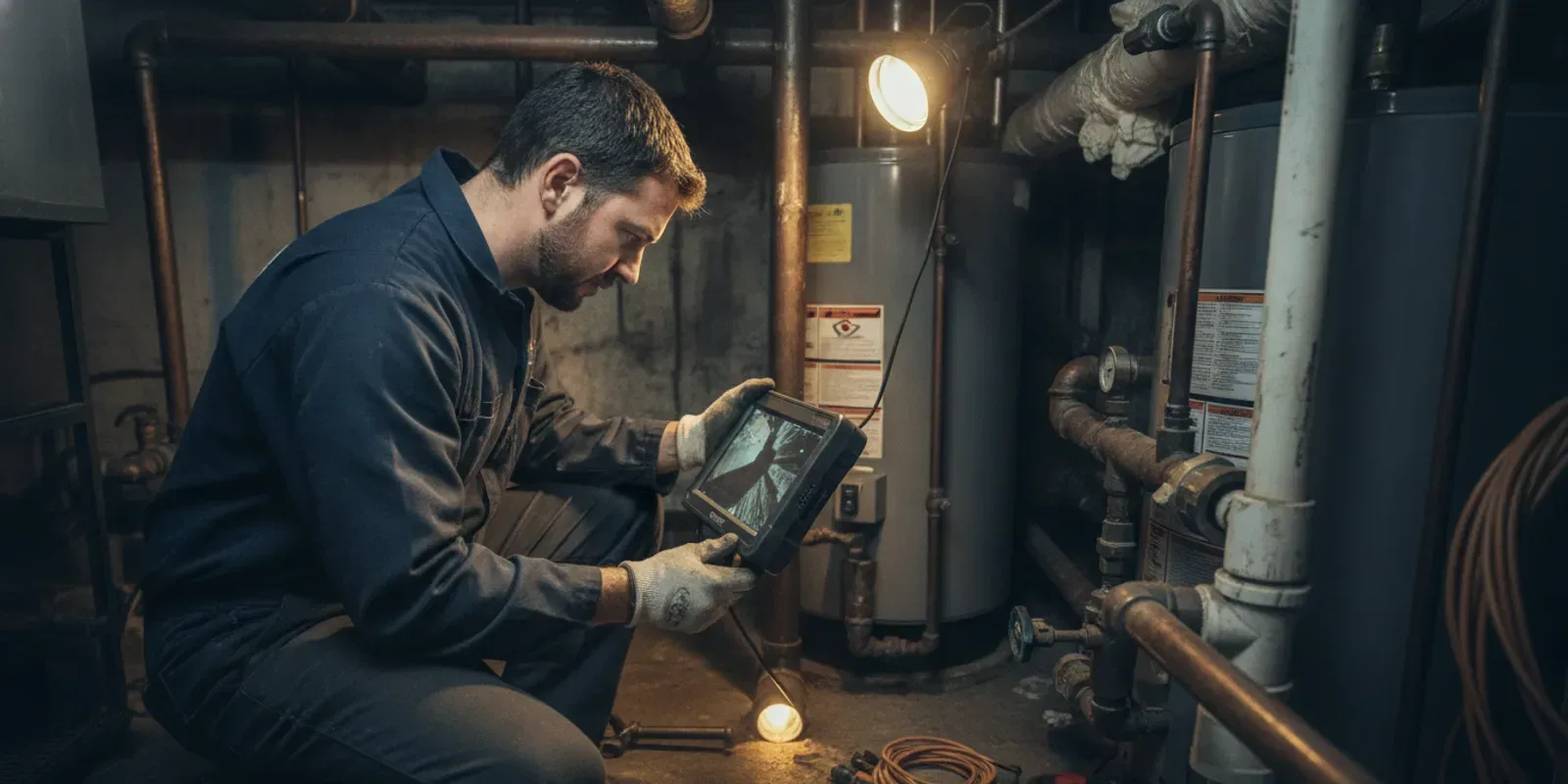
A sewer camera inspection is a diagnostic service in which a plumber or sewer professional advances a camera into an accessible section of a sewer line and views the pipe interior on a monitor. Depending on the equipment and access, the camera may be mounted on a flexible push cable or another inspection device. The purpose is to observe the pipe and its contents, note the location of visible concerns where possible, and help determine what further investigation or repair may be appropriate.
Think of it as a visual assessment of the portion of pipe the camera can reach, not a guarantee about every part of a property's plumbing. The camera has to enter through a suitable opening, and visibility depends on access and conditions inside the line. A result should be interpreted alongside the reported symptoms, plumbing layout, and what the technician can inspect in person.
Municipal guidance in Seattle similarly describes using a plumber, drain service, or sewer inspector to run a video camera through a property's side sewer to look for problems. That is a general description of the tool, not a finding about any specific NYC property or a promise that a camera will reveal every issue. Seattle Public Utilities' sewer-pipe guidance offers a plain-language overview.
What can the camera help show?
A camera can provide a view of visible conditions along the inspected section of pipe. Depending on what is present and how clear the view is, the inspection may help identify or locate:
- Debris or buildup that appears to narrow the flow path.
- Root intrusion or material entering through a joint or opening.
- Cracks, breaks, offsets, or sections that appear out of alignment.
- Standing water or a low area that may be affecting flow.
- A blockage, obstruction, or other visible change along the route.
- Where the camera reaches and whether the view changes at a particular point.
These are observations, not automatic diagnoses. A dark, obstructed, or water-filled view may limit what can be seen. Some concerns may require a different inspection method or additional access. And an image alone does not answer every question about why a line is failing, how extensive a repair should be, or what work a building may authorize. Ask the technician to explain what is directly visible, what is uncertain, and what the inspection did not cover.
When may an inspection be useful?
A camera may be worth discussing when the same drain or sewer trouble returns, when symptoms affect several fixtures, or when a technician needs more information about an accessible pipe before recommending a repair. For a property owner, the point is to replace guesswork with a better-informed conversation when visual evidence could change the next step.
Consider asking about an inspection if:
- A drain has been cleared but the same issue comes back.
- More than one fixture or area seems to be affected, suggesting the issue could involve a shared section.
- A sewer backup has occurred and the source or location is not clear from the symptoms alone.
- You are comparing repair approaches and need to understand what condition is visible in an accessible section of line.
- You manage a multifamily property and need a clear account of what was observed before planning access or follow-up work.
There are also situations where the first step is not a camera. A single fixture clog may have a simple cause close to the fixture. An active overflow or sewage backup calls for prompt attention and safe handling; do not delay urgent response while trying to arrange a diagnostic visit. If you are unsure whether symptoms point to one fixture or a broader line issue, describe exactly what is happening and which drains are affected when you contact a plumber.
What does a camera inspection not tell you?
A sewer camera is a diagnostic aid, not a complete plumbing survey or a repair by itself. It does not necessarily show the full condition of every branch, fitting, or concealed pipe in a building. The camera can only inspect the path it can enter and travel through. A blockage, heavy water, deposits, bends, access limits, or equipment constraints may prevent a clear view or stop the camera before the full line is covered.
A visual observation also needs context. For example, a visible crack may be important, but deciding what to do requires an assessment of location, symptoms, pipe material and layout where known, access, and the practical scope of work. A camera view cannot by itself promise that a repair will solve every symptom or establish the final cost of a repair. The technician needs to assess the job on site and explain the proposed scope. Do not treat a camera image as a substitute for that discussion.
It may help to separate three questions:
- What was seen? Ask for a plain description of the condition and where it appeared.
- What could not be confirmed? Ask about sections the camera could not reach or see clearly.
- What is the recommended next step? Ask how the observation relates to the symptoms and what other options or checks may be appropriate.
How is a camera recommendation different from clearing a clog?
Drain clearing addresses an obstruction or flow problem through an appropriate method. A camera inspection is intended to provide a visual assessment of an accessible pipe section. Sometimes clearing the line comes first so a technician can get a better view; sometimes the visible or reported conditions point to a different diagnostic or repair sequence. The right order depends on what is happening at the property, where access is available, and what the technician finds.
That distinction matters because the recurring symptom and its cause are not always the same thing. Restoring flow does not necessarily explain why the problem developed, while a camera view does not automatically remove an obstruction. If you want to understand possible differences in symptoms, see how a clogged drain can differ from a sewer backup. For an on-site evaluation of a repair, a technician may also discuss the available sewer drain repair options after assessing the line.
What should NYC owners prepare before the visit?
A little background can help the technician understand the problem and decide what access may be needed. Before a planned assessment, note when symptoms began, whether they are constant or intermittent, and whether other fixtures or floors are affected. Tell the technician about recent backups, drain clearing, plumbing work, or changes in use that may be relevant. If you are a tenant or resident, inform the building manager or superintendent so the right person can coordinate access to shared spaces.
For an apartment building, identify who can authorize work and who can provide access to the affected area, cleanout, or utility space. Confirm building procedures for entry, keys, work hours, and any communication residents need. Do not assume that a camera can be inserted from a particular fixture or that a shared line can be examined without coordination. Access and the actual pipe layout need to be assessed at the property.
During the discussion, ask whether the proposed inspection is limited to a particular section, how findings will be explained, and whether any clearing or other work is separate from the visual inspection. Ask what happens if the camera cannot pass or the view is unclear. These questions help make the scope understandable before you decide how to proceed; they do not assume that every visit will require the same preparation or equipment.
How should you review the findings?
After the inspection, ask the technician to connect the observations to the original symptoms. If a condition is located, clarify whether the location is approximate or directly established and whether the camera saw enough to characterize it. If nothing conclusive is visible, ask whether that means the inspected section looked clear, the view was limited, or the problem may be elsewhere. “No clear finding” is useful information, but it should not be mistaken for proof that every pipe in the property is trouble-free.
Before approving any repair, make sure you understand the proposed work area, why it is recommended, what access it needs, and whether additional work could be identified once the job begins. For buildings, also confirm who is responsible for approval and how affected residents or businesses will be informed. A clear explanation supports a more informed decision without turning a diagnostic observation into a blanket recommendation.
When should you call for help?
Call promptly when sewage is backing up, water is actively overflowing, or a plumbing problem is causing damage. Keep people away from contaminated water and follow building procedures while help is arranged. For a recurring but non-urgent drain concern, describe the pattern and affected fixtures and ask whether an on-site assessment should include a camera inspection. A camera is one possible diagnostic step, not something every clog requires.
Frequently asked questions
Does every slow drain need a sewer camera inspection?
No. A slow drain can have a local cause, and a technician should assess the symptoms before recommending a camera. A camera may be useful when there is a recurring issue or a reason to examine an accessible sewer section.
Can the camera find the exact cause of a backup?
It may show a visible obstruction or pipe condition along the route it can inspect, but it cannot guarantee a complete explanation. Access, visibility, and the area covered all matter. Ask what the camera showed and what remains uncertain.
Does a camera inspection repair the sewer line?
No. It is a diagnostic visual inspection. Clearing, repair, or replacement is separate work and should be discussed based on the on-site assessment and findings.
What if the camera cannot pass through the pipe?
The technician should explain where progress stopped and whether an obstruction, access issue, or limited visibility affected the inspection. Ask what other assessment or next step may be appropriate rather than assuming the unseen section is clear.
What is the next step?
If a recurring drain or sewer problem is affecting your NYC property, share the symptoms and arrange an on-site assessment before deciding whether a camera or another approach is appropriate. Learn more about sewer camera inspections, or call (212) 567-2000 to discuss the issue with Nonstop Plumbers.