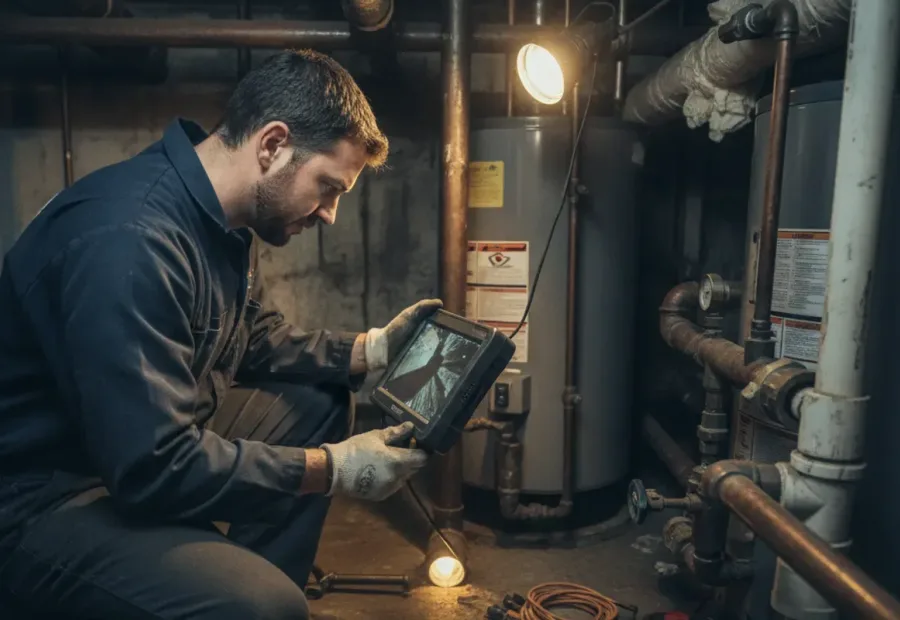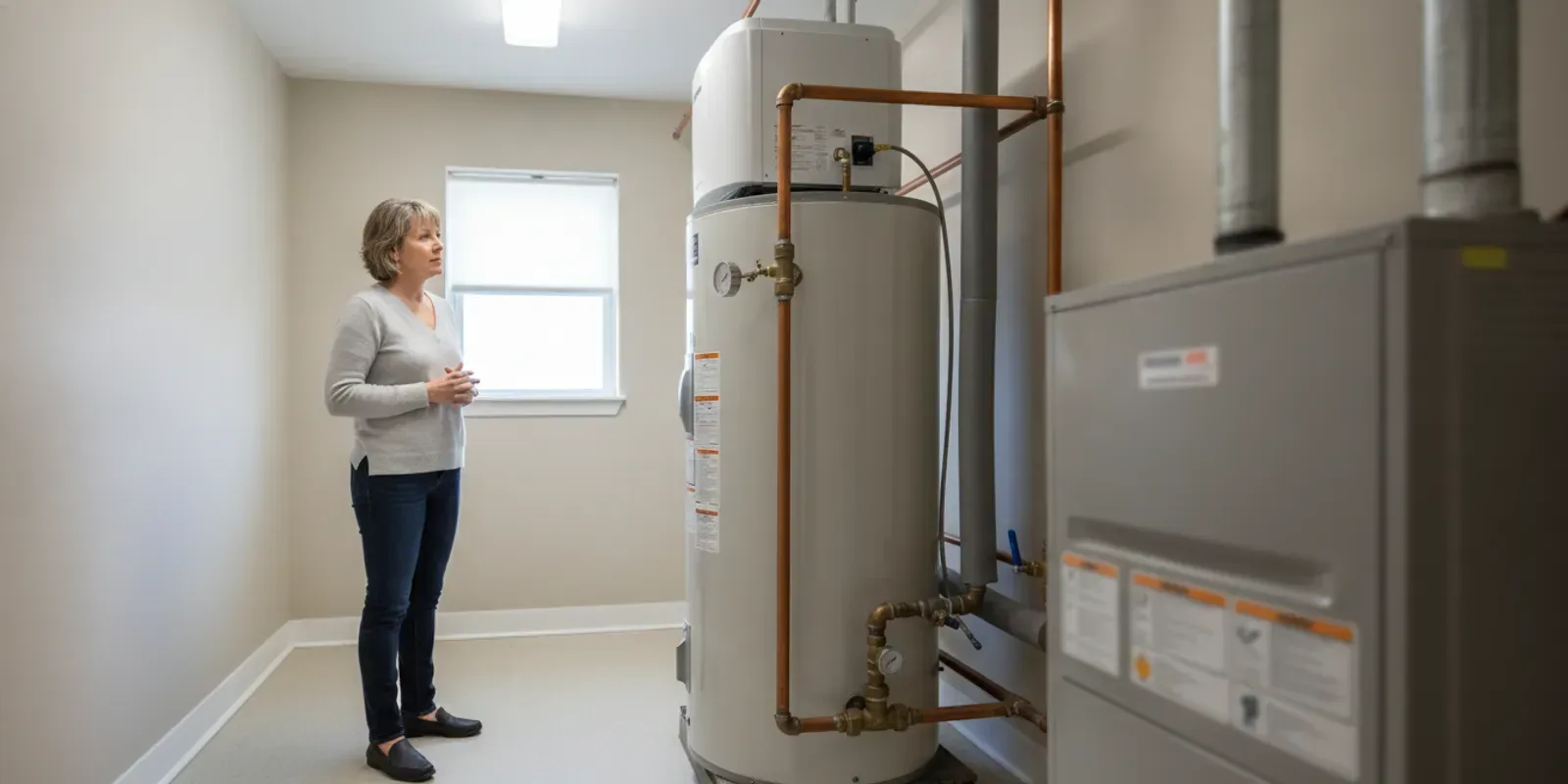
When hot water suddenly disappears, a few careful checks can help you identify what changed without opening equipment or risking injury. This guide to hot water heater repair explains what NYC homeowners and building teams can safely observe, which symptoms call for urgent help, and what details will help a technician assess the problem.
Request a planned water heater assessment
What should you check first when hot water stops?
Start with the symptoms, not the heater’s internal components. Check whether the loss of hot water affects one fixture or the whole home. If only one sink or shower is affected, the issue may be limited to that fixture or its controls rather than the water heater. If every hot-water tap is affected, note when the change began and whether the water is completely cold, merely lukewarm, or inconsistent.
Look from a safe distance for visible water around the base, wet flooring, corrosion, unusual sounds, or a smell of gas. Do not touch wet electrical equipment, remove access panels, relight equipment, or adjust gas connections. If you suspect a gas leak, leave the area and contact the appropriate emergency service from a safe location. For active water loss or flooding, contact plumbing dispatch promptly.
- Check more than one hot-water fixture and compare the results.
- Note whether the problem is constant or comes and goes.
- Observe visible leaks or water damage without moving the heater.
- Record any recent outage, service, or change in household use that you know about.
Be specific about the time pattern. For example, “the shower starts warm, then turns cold after a few minutes” gives a technician more useful context than “the heater is broken.” Record whether the change happens at every tap, after a particular amount of use, or only at certain times of day. These observations do not identify a failed part, but they help separate a single-fixture complaint from a wider supply problem.
Could the problem be isolated to one fixture?
A single fixture with no hot water points to a different troubleshooting path from a whole-home outage. Check that the faucet or shower control is set as expected and compare another nearby fixture. A clogged aerator can affect flow, but it does not explain a whole-building loss of hot water. In an apartment building, ask whether neighbors or building staff report the same issue; a shared system may affect multiple homes.
Do not assume a building-wide issue is resolved simply because a neighbor still has hot water. Systems may serve different risers or zones. Tell the superintendent or property manager what you observed, including which fixtures and units are affected. If you need help identifying a plumbing issue in a NYC property, the company’s plumbing FAQ can help you prepare questions.
A simple comparison can make a report clearer: note “kitchen sink and bathroom sink are cold, shower is lukewarm,” rather than reporting only that there is “no hot water.” If the building has a shared system, include the apartment number and the time you checked. Do not enter a locked mechanical room or operate shared valves to test your theory. Building staff can determine who is authorized to inspect common equipment.
What visible signs suggest a leak or equipment problem?
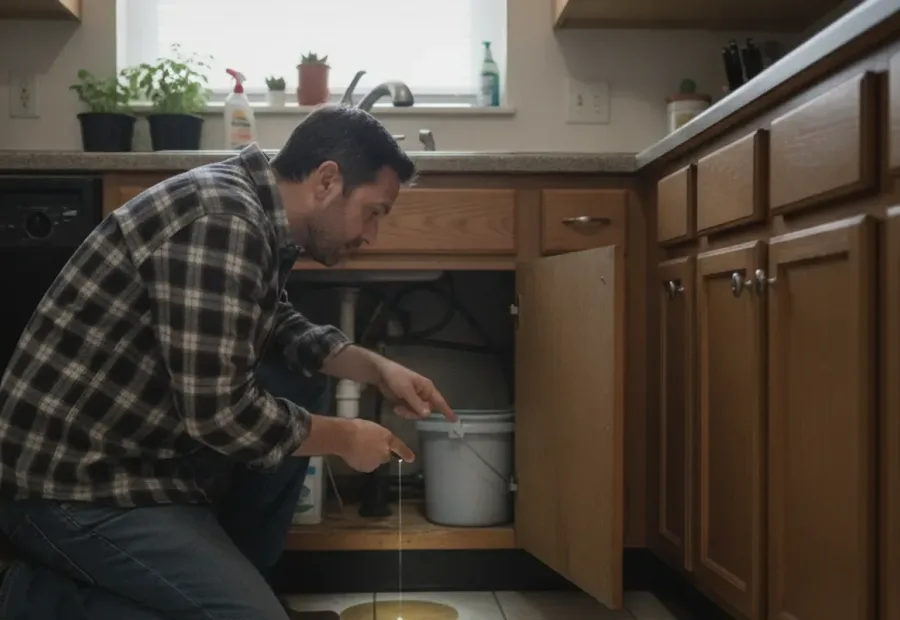
Water pooling near the tank, steady dripping from a connection, or dampness spreading across the floor deserves prompt attention. A small amount of water can come from different sources, so observation alone cannot establish the cause. Do not assume that every puddle comes from the heater; nearby plumbing, a drain, or another appliance may be involved.
Other clues include a change in water temperature, reduced hot-water supply, discolored water, or unusual noise. These signs have several possible causes and are not a reliable do-it-yourself diagnosis. If the heater is in a shared utility space, keep the area accessible and notify the responsible building contact. For broader plumbing concerns, review the company’s guidance on responding to a plumbing leak in an NYC apartment building.
When you notice moisture, describe what you can see without getting close to a hazard: where the water appears, whether it is dripping or spreading, and whether the floor or nearby wall is wet. If safe from a dry location, take a photo to document the visible condition. Avoid touching corrosion, opening a drain, or placing a container beneath a leak if doing so would bring you close to hot surfaces, electricity, or a suspected gas problem.
What safe checks can you make without opening the heater?
Use only visible, ordinary controls intended for occupants. If your home has a clearly labeled circuit breaker and you already know which one serves the heater, you can look to see whether it has tripped. Do not repeatedly reset a breaker, remove covers, handle wiring, or work around standing water. If a breaker trips again, stop and request professional assessment.
For gas equipment, do not attempt to relight a pilot or adjust a valve unless the manufacturer’s instructions specifically identify a safe user step and you can follow them without smelling gas or seeing a hazard. When in doubt, leave the equipment untouched. Do not turn the temperature control to an extreme setting as a test. A technician can inspect the appliance and connected plumbing on site; a phone description alone cannot confirm a repair scope or quote.
Keep the check deliberately limited. You can observe a display or indicator that is already visible and note any message or status light, but do not remove a cover to read a label or reach an internal reset. If the manufacturer’s manual describes an ordinary user control, follow it only when there is no leak, gas odor, electrical concern, or other hazard. Stop if the instruction is unclear. A safe observation is useful; experimenting with unfamiliar controls can make the situation harder to assess.
When does a water heater problem need urgent attention?
Act promptly when there is active leaking, flooding, a suspected gas leak, water near electrical equipment, or a loss of hot water that affects a building’s essential operations. Move people away from the immediate hazard and avoid contact with wet equipment. For active plumbing emergencies, call dispatch at (212) 567-2000. Emergency service is available 24/7; arrival timing depends on traffic, access, and current call volume.
A complete loss of hot water without a visible hazard may still need prompt diagnosis, especially in a multi-unit building. Let the superintendent or property manager know and ask whether the system serves other apartments. The 24/7 emergency plumbing service page explains the dispatch path for urgent plumbing problems.
Keep the response proportional to what you observe. A slow drip that is contained and not near electrical equipment still needs attention, but it may follow a different path from a rapidly spreading leak or suspected gas leak. Do not delay dispatch when water is actively escaping or creating a hazard. For a no-hot-water call, report whether the issue is limited to one unit or affects other residents, if you know. That helps the team understand the situation while avoiding assumptions about the cause or the exact repair.
What should you prepare before requesting service?
Clear information helps the technician understand what to assess. Write down when the issue started, which fixtures are affected, whether other units are affected, and what visible signs you observed. If it is safe, take a photo of visible water or the equipment label from a dry location. Do not remove panels or move the appliance to capture an image.
- Property type and access: Say whether it is a house, condo, apartment, or shared building, and explain how the technician can reach the equipment.
- Extent of the symptom: List the fixtures that are affected and whether hot water is absent, lukewarm, or intermittent.
- Timing and recent changes: Note when the problem began and whether there was a known outage or recent service.
- Visible concerns: Describe a leak, water damage, unusual sound, or odor. For a suspected gas leak, move to safety before calling.
- System responsibility: If you know whether the equipment serves one apartment or the building, share that information; do not guess.
- Access coordination: Provide a contact person, building entry instructions, and any known restrictions on reaching a utility area.
For planned, non-urgent work or an estimate request, use the contact page. The form is for non-urgent estimates and planned work, not a confirmed appointment. A technician needs to assess the job on site to determine scope and provide a quote. For service details, see water heater repair.
Before the visit, clear a safe path to the equipment without moving or disconnecting it. If it is in a locked room, coordinate access with the superintendent or property manager. Keep pets and children away from the work area. If you have a manual or service record already available, you can set it aside for the technician, but do not delay reporting an active leak or safety concern while searching for paperwork.
What can an on-site assessment clarify?
Hot-water loss can stem from the heater, its controls, the fuel or electrical supply, connected piping, or a building system. An on-site assessment helps determine which equipment and connections are involved and whether repair or replacement should be considered. The right next step depends on the heater’s condition, the nature of the fault, access, and the property’s requirements.
In an apartment building, confirm who is responsible for the equipment and whether access or a shutdown needs coordination. Owners and managers should consider communicating with affected residents before work begins. For a home, make sure the area around the equipment is accessible and share any known service history. No remote symptom checklist can establish a final scope or price.
Ask the technician to connect the recommendation to what was inspected. Useful questions include: Which component or connection appears to be involved? What evidence supports that finding? Does the issue appear limited to this heater, or could shared piping or controls be involved? What needs to be accessible before work starts? The purpose is not to diagnose the unit yourself, but to understand the proposed work and any decisions the owner or manager needs to make.
What changes when the heater serves an apartment building?
A shared hot-water system can affect many residents, so the first task is to establish the extent of the outage. Ask the superintendent or manager whether the issue is limited to a unit, a riser, or the whole building, if that information is available. Keep a simple record of reports and times. This can help the service team distinguish a single fixture complaint from a broader system problem without assuming the cause.
Building staff should identify who can authorize access to the mechanical space and whether residents need notice before equipment is inspected. Do not operate unfamiliar valves or shut down common equipment based on guesswork. If there is a leak, describe where water is appearing and whether it is spreading; do not enter an unsafe area to investigate. For buildings with a central plant, the assessment may involve components beyond an individual apartment heater.
A practical report log can include the unit or room, time reported, fixtures affected, whether water is fully cold or partly warm, and any visible leak. Keep observations separate from conclusions: “three apartments reported cold water” is more useful than “the boiler failed” when no technician has inspected the system. Share updates with residents through the building’s normal communication process, and tell them not to adjust shared equipment or enter restricted rooms.
Replacement or major repair decisions in commercial buildings can involve additional code and system considerations. A Northwest Energy Efficiency Alliance report discusses water-heater construction or repair challenges tied to decarbonization pressure and reduced reliance on gas, while noting efficiency tradeoffs among alternatives. Read the NEEA research on existing water heaters in commercial buildings. That research concerns commercial buildings; it is not a diagnosis of a particular NYC home or a substitute for checking applicable requirements for a specific project.
How should you compare repair and replacement discussions?
Do not decide based on one symptom alone. Ask the technician to explain what was observed, which part or connection is implicated, whether the issue appears localized or systemic, and what work is proposed. If replacement is being considered, ask what existing connections or building conditions affect the scope, and what preparation, access, or coordination will be needed.
- Observed condition: What was inspected, and what evidence points to the proposed work?
- Scope: Which equipment and piping are included, and what is outside the proposed work?
- Disruption: Will hot water need to be shut off, and who should receive notice?
- Property requirements: Are building approvals, permits, or other project checks applicable?
- Follow-up: What should the owner or manager monitor after the work, and whom should they contact if the symptom returns?
These questions help owners understand the recommendation without presuming that repair is always preferable or that replacement is automatically required. The technician’s on-site findings and the property’s specific conditions determine the appropriate proposal. Ask for the scope in clear terms so you can compare what is included, what preparation is needed, and whether the work affects other residents or building systems.
Frequently asked questions
Should I turn off the water heater if it is leaking?
Do not touch the heater or its controls if there is water near electrical equipment, a gas smell, or another immediate hazard. Keep clear and seek urgent assistance. If there is a safe, clearly identified shutoff accessible without approaching the hazard, follow your building’s emergency procedure or contact a qualified professional for guidance.
Why is one faucet cold while the others are hot?
A problem at one fixture or its control may be involved, but the exact cause depends on the plumbing. Compare other fixtures and report the difference when requesting an assessment. Avoid dismantling the faucet or heater if you are not qualified.
Can I get a repair quote over the phone?
A technician must assess the job on site to determine its scope and provide a quote. You can share symptoms and access details when contacting the company, but a phone conversation cannot verify the condition of the equipment.
Is no hot water always an emergency?
Not always. A no-hot-water problem without leaking, gas odor, or another immediate hazard can be arranged for assessment through the non-urgent contact path. Active leaks, flooding, suspected gas leaks, or water near electrical equipment require urgent attention.
Request an on-site water heater assessment
If hot water is out, note the symptoms, keep clear of hazards, and contact the appropriate service path; for active leaks or flooding, call Nonstop Plumbers at (212) 567-2000.