A clogged drain vs sewer backup is a scope question, not a guess about the pipe material. A local clog usually slows or stops one fixture. A sewer backup pushes wastewater back through more than one drain, often a toilet, a floor drain, or a fixture on a lower floor. In a New York City house or apartment building, that difference decides whether you can wait for a single-drain cleaning or need to stop water use and call for help.
Request emergency plumbing help
This guide is a first look for residents, supers, and property managers. It will not name the cause, the price, or how fast a crew can arrive. Those depend on access, the borough, and what the line is doing when someone is on site.
What a clogged drain vs sewer backup looks like
A drain line carries water away from a fixture. A building sewer, often called the house connection or sewer service line, carries wastewater from the building toward the city sewer in the street. They are connected, but they are not the same pipe. A stoppage near a sink stays local. A stoppage in the shared line can send water backward.
Use what you can see before you decide which problem you have. The columns below are a first sort, not a final diagnosis.
A first sort: local clog or sewer backup
- Fixtures involved. More like a local clog One sink, tub, or toilet. More like a sewer backup Two or more fixtures, or more than one apartment.
- Where it shows up. More like a local clog The fixture you just used. More like a sewer backup A lower floor, floor drain, or a fixture you did not use.
- Flow direction. More like a local clog Water goes down slowly or not at all. More like a sewer backup Water rises, gurgles, or comes back out.
- What the water looks like. More like a local clog Clear or soapy water at that fixture. More like a sewer backup Dirty water, paper, or a sewage smell.
- Timing. More like a local clog Tied to that fixture's recent use. More like a sewer backup Starts when anyone in the line uses water, or during heavy rain.
One slow bathroom sink is usually a branch clog. A toilet that rises when the upstairs kitchen runs is a different problem. In a multifamily building, ask whether the stack, the cellar, or a neighbor on the same line is affected. A symptom in one apartment can still be a shared line.
Check affected fixtures before you call it a clog
Start with the fixture in front of you only if the water is simply slow and looks ordinary. If water is rising, dirty, smells like sewage, or another fixture is already reacting, stop all water use and skip testing. Otherwise, a cup or a short faucet burst is enough to observe the pattern without deliberately sending a large volume into the line.
- Note which fixture failed first, and whether it is a sink, tub, shower, washer, or toilet.
- If there are no warning signs above, observe a second fixture on the same floor without running a large volume of water. If only the first one is slow, the stoppage is likely in that branch.
- Ask about the floor above and the floor below. A rising lower toilet or floor drain points past a single fixture.
- Watch the direction. Slow drainage stays in the fixture. A backup moves the other way.
- In an apartment, tell the super what you saw and which units share the stack. Do not open a shared cleanout or turn building valves.
A plunger can help a single toilet or sink that you know is local. Stop if the water is dirty, if another fixture reacts, or if the smell is sewage. Chemical openers are a poor bet on a shared line. They often sit in the pipe, and they can make the next service call harder.
Recurrence matters. A sink that clogs once after a heavy cooking day is different from a drain that slows again every week. Repeated slowdowns, even in one fixture, can mean the blockage is farther down the line. That is a reason to look, not a diagnosis you can make from the apartment.
Wastewater signs that point to a sewer backup
Sewage is not just slow water. NYC DEP says the most common cause of sewer backups in the city is blocked pipes from grease, wipes, and other items sent down toilets and sinks. DEP publishes that guidance on its sewer backup page. When that waste cannot move, it can come back into the building. The warning signs are practical:
- More than one drain gurgles, or a toilet bubbles when a sink or washer runs.
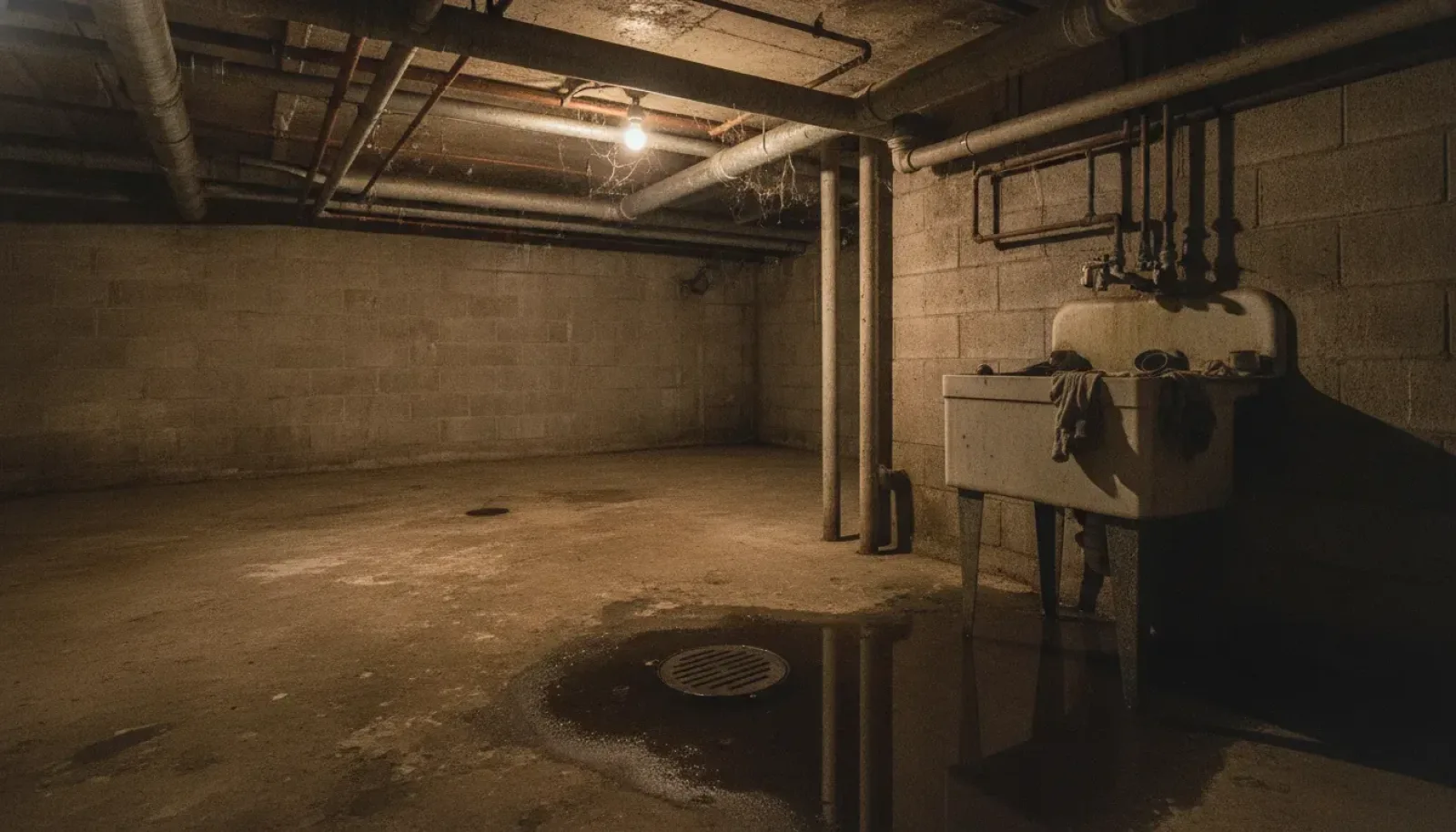
- A floor drain, tub, or basement fixture overflows even though nobody used it.
- The water is dark, carries debris or paper, or smells like sewage.
- The problem shows up in more than one apartment, or on the lowest floor first.
- It starts or gets worse during heavy rain, then eases when the rain stops.
Heavy rain can overwhelm a combined or surcharged city sewer and push water back through a private connection. Rain does not prove the city main is the cause. DEP inspects a reported backup and may find the problem in the city sewer or in the private sewer service line, which the property owner maintains. A house or small building has a different path from a large apartment house, but the first clue is still the same: where the water appears, and which fixtures move together.
Odor alone is not enough. A dry trap can smell without any backup. If the smell arrives with rising water, multiple fixtures, or a wet cellar drain, treat it as wastewater until someone checks the line.
NYC DEP also draws a line that matters for owners. The private sewer service line connects the building to the city sewer in the street, and the property owner maintains that private line. If DEP confirms the backup is in the city system, the city starts its repair process. If DEP confirms the backup is in the private line, the owner can receive a Notice to Repair. That outcome is not something a resident can know from a gurgling sink. It is why the first job is to record the pattern and get the right inspection, not to argue about fault while water is still rising.
A single-family house and a walk-up do not fail the same way, even when the clues match. In a house, one bathroom and a basement floor drain may be the whole system. In a multifamily building, stacks serve many kitchens and baths. A backup on the lowest floor can be the shared line, while an upper-floor sink that nobody else shares is still a local clog. Ask who else is affected before you treat every slow drain as a building emergency, and before you dismiss a wet cellar as one bad fixture.
What to do in the first minutes
If the water is only slow at one fixture and looks like ordinary sink or tub water, stop using that fixture and arrange a drain cleaning. If wastewater is coming back, treat the building as an active backup.
- Stop running water in the affected line, including laundry and dishwashers.
- Keep people and pets away from the water. NYC DEP warns that floodwater and sewage can carry germs that infect eyes, skin, and the stomach.
- Do not mop sewage through the apartment or into another drain.
- If you can safely shut the water to that one fixture, do it. Leave unfamiliar building valves alone.
- In a co-op, condo, or rental, notify the super or property manager and say which floors are involved.
- If raw sewage backs up into the home, report it to 311 so DEP can inspect; you do not need to determine first whether the cause is in the city sewer or the private line. Keep the 311 tracking number.
Call 911 if storm water creates an immediate danger. For an active backup inside the property, request emergency plumbing help rather than waiting on a routine contact form. Service scope and timing depend on severity, access, traffic, and call volume. A visit can stabilize the backup. It is not a promise that the repair is finished the same day.
Request service for an active backup
Write the timeline while it is fresh. Note the clock time, whether anyone was showering or running a washer, and whether the street had standing water. A photo of the fixture, taken from a dry spot, helps the super and the plumber. Do not wade in to get a better angle. If the water reached hallways or a neighbor's ceiling, say that too. Spread across units is a building issue even when your own sink now looks normal.
Waiting is reasonable only for a contained, single-fixture slowdown with clear water and no smell of sewage. Waiting is a poor plan when a toilet is rising, a floor drain is wet, or a second apartment reports the same hour. Grease poured into a sink, wipes flushed by one unit, or a heavy storm can all start the same overflow. You do not need the cause in hand to choose the urgent path. You need the scope.
Which service fits after the triage
Match the next call to the pattern you saw. Do not ask for a camera, a jet, or a repair until the symptoms earn it.
- One fixture, ordinary water, no neighbors affected: start with drain cleaning and sewer line services aimed at that branch.
- A stubborn single-line stoppage that a basic clearing should reach: sewer drain snaking and cleaning may be the right next step.
- Several fixtures, a rising lower drain, or sewage odor with water: use 24/7 emergency plumbing repairs so the crew can isolate and stabilize the backup.
- The backup returns after a clearing, or nobody can tell where the stoppage sits: a later visit may need a sewer camera inspection or sewer drain repair. Those are follow-ups, not the first phone script.
Bring the person on the phone a short report: which fixtures, which floors, whether water came up or only went down slowly, whether it followed rain, and whether a neighbor is affected. That is more useful than a guess about roots, grease, or a broken pipe.
NYC buildings add access questions a house does not. A super may need to open a cellar, a pump room, or a cleanout. A resident usually cannot authorize work on a shared stack. Say so when you call, and let building staff coordinate entry. Permitted repair work, when the line needs it, is a separate scope from the first triage.
FAQ: clogged drain vs sewer backup
How can you tell a clogged drain from a sewer backup?
Compare the fixtures. One slow sink or tub, with ordinary water, is usually a local clog. Two or more fixtures reacting together, water rising in a lower drain, or sewage coming back is a sewer backup until the line is checked.
Is a drain line the same as a sewer line?
No. A drain line serves a fixture or a branch. The sewer line carries the building's wastewater toward the city sewer. A clog can sit in either place, which is why the number of fixtures matters more than the word you use.
Can heavy rain cause a sewer backup?
It can. NYC DEP notes that heavy rain may delay inspection and that intense storms can surcharge sewers. Rain is a clue, not proof. If lower drains overflow during a storm, stop water use and report sewage in the home to 311.
What should you do when sewage backs up into the apartment?
Stop using water, keep people away from it, and tell the super or owner which floors are wet. Call dispatch for an active backup, and report the raw sewage backup to 311. Do not treat the water as a mop-up job.
What is the difference between a full septic tank and a clogged drain?
Most of New York City is on the city sewer, not a septic tank. A full septic tank is a private system that needs pumping. A clogged drain is a local stoppage. If you are in a borough building tied to the street sewer, septic advice does not apply.
Get the right visit for what you are seeing
Write down the fixtures, the floor, and whether water is going down slowly or coming back up. Then choose the path that matches that pattern.
For an active backup, request emergency plumbing help. For a single slow drain that can wait, request drain and sewer service through the service page and describe the fixture. Either way, the goal is a scoped visit, not a guess from the sidewalk.
Owners and managers should keep the 311 number with the plumber's notes. DEP says it tries to inspect a reported sewer backup within six hours, and that heavy rain or a large snowmelt can delay that visit. A city inspection and a private plumbing visit answer different questions. One looks at the public sewer. The other looks at the building line, the cleanout, and the fixtures that failed. You may need both. Neither visit sets a price from the phone, and neither should be described as a guaranteed same-day rebuild.
Residents can still help without taking apart the system. Skip the chemical opener. Keep the affected bathroom closed. Tell the super if the tub gurgles when the neighbor's washer runs. If the building has a preferred plumber or an emergency procedure, tell the super or property manager so access and authorization are clear. Do not open a shared cleanout or promise a repair scope before the line is checked.
The comparison stays useful after the water drops, too. If one sink was slow and a cleaning cleared it, you likely had a local clog. If lower drains overflowed together, or the problem returned with the next storm, ask for the line to be evaluated instead of repeating the same quick opening. Nonstop can move from emergency stabilization into drain and sewer work when the symptoms call for it. The article stops at that handoff. Prevention programs, root-damage checklists, and cleanup methods are separate jobs.