A sewer backup can spread quickly through a home or occupied building, especially when more than one fixture is affected. If you need a plumber for sewer backup in New York City, first protect people from contact with wastewater, pause plumbing use, and call for help when the backup is active.
What should you do first when sewage backs up?
Keep people and pets away from the affected area. Do not walk through wastewater or touch wet items with bare hands. Sewage may contain germs, so avoid contact and wash exposed skin with soap and clean water if contact occurs. For broader public-health information, consult the Centers for Disease Control and Prevention. If water is near electrical equipment, do not enter the area or touch switches or appliances. Move to a safe location and contact building staff or emergency services as appropriate.
Stop using plumbing fixtures and appliances that discharge into the affected system. That includes sinks, toilets, tubs, showers, dishwashers, and laundry equipment. Do not flush to test the line or run water in another fixture to see what happens. If the restriction is in a shared drain, added water use may create more discharge at a low fixture elsewhere in the building.
If wastewater is actively entering a room, spreading, or affecting several fixtures, call a plumber promptly. Nonstop Plumbers handles emergency plumbing calls 24/7. Arrival depends on traffic, access, and current call volume, so give clear information when you call rather than relying on a fixed arrival estimate.
How can you tell whether the issue may involve a shared sewer line?
A single slow or blocked fixture may point to a local drain issue, but it does not establish where a restriction is located. Concern about a shared or building drain increases when several fixtures back up, when lower-floor fixtures are affected, or when residents in more than one apartment report symptoms at about the same time. These are useful observations, not a diagnosis. A plumber needs to assess the system and access conditions to determine what is happening.
For example, if a ground-floor bathroom drain rises when an upstairs apartment uses water, tell the building contact exactly what happened and when. Do not repeat the test. If a kitchen sink is slow but every other fixture works normally, report that detail too; it gives the plumber a more complete picture without proving the cause. A basement floor drain, a toilet, and a tub may connect to different branches, so identify each fixture rather than describing the whole property as simply “clogged.”
Ask nearby occupants whether they have noticed a backup, gurgling, or unusual drainage, but do not ask them to run water to confirm it. Tell the superintendent which fixtures and units are involved and when symptoms began. For background on how symptoms can differ, see how a clogged drain differs from a sewer backup. The aim is to report what you observed, not to assign responsibility to a particular unit or to the city sewer.
What information should you give the plumber?
A concise, factual call helps dispatch understand the immediate condition and helps the technician prepare to assess it. You do not need to solve the plumbing mystery before calling. Share what you know, and say when a detail is uncertain.
- The full address, borough, floor, apartment or business number, and best entrance.
- Which fixtures or drains are affected, including whether more than one room or unit is involved.
- Whether wastewater is still coming in, whether it is spreading, and where it is contained.
- When the first symptom appeared and whether it has changed or stopped.
- Whether occupants have noticed gurgling, slow drainage, or backup at other fixtures.
- Any recent plumbing work, unusual sounds, or relevant access limitations you observed.
- Whether building staff can meet the technician and provide access to affected or shared spaces.
- Whether a drain product or other chemical was used, and what product if known.
If you are a tenant or resident, notify the owner, manager, or superintendent while arranging appropriate help. Do not delay an urgent call to gather every answer. A building contact may be able to collect reports from other floors and coordinate entry, while a resident can focus on describing the affected space and staying clear of it.
What should you avoid doing before the assessment?
- Do not continue using water. Pause fixtures and appliances that discharge into the affected plumbing until a plumber or building contact gives further direction.
- Do not repeatedly plunge or probe. Forceful attempts and improvised tools may worsen an overflow or damage a fixture, particularly when multiple drains are involved.
- Do not add chemical drain cleaner. It may not reach the obstruction, and it can create a chemical exposure risk for anyone who later works on the drain. Tell the plumber if a product has already been used.
- Do not open cleanouts or access covers without knowing what is behind them. A backed-up line may release wastewater unexpectedly. Leave that work to someone equipped to assess the system safely.
- Do not enter standing wastewater to retrieve belongings. Keep people and pets away and avoid handling contaminated items. If there is a serious electrical hazard, stay out and get appropriate emergency assistance.
- Do not throw away useful information before documenting the condition. If it is safe to do so, take photos from a dry location and note the time. Do not enter contaminated water to get a better picture.
These steps are about limiting additional exposure and communicating clearly; they do not replace professional cleanup guidance or determine who is responsible for damage. For practical coordination in a multi-unit property, read this guide to responding to a plumbing problem in an NYC apartment building. A sewer backup differs from a leak, but access, factual reporting, and resident coordination matter in both situations.
How should a building coordinate the response?
In a condo, co-op, rental building, or townhouse with shared systems, identify one building contact to coordinate access and updates. The superintendent or manager can notify affected occupants, keep a list of reported symptoms, and help the technician reach relevant areas. If different people call from different units, ask them to share observations with the building contact so details do not get lost or repeated inconsistently.
Use a simple incident log. Record the time of each report, the unit or common area, the fixture involved, whether wastewater was present, and whether the condition continued. Keep observations separate from guesses: “water rose in the floor drain at 2:15 p.m.” is more useful than “the main line is definitely blocked.” Note when plumbing use was paused and who was contacted. This record can help the technician compare symptoms across locations and can help the building follow up after the visit.
Give residents a clear, limited instruction: stop using affected plumbing and do not enter the affected area until the building contact provides an update. Avoid broad statements that imply all units are affected if only one location has been reported. If access to a basement, roof, utility room, or apartment may be needed, arrange it through the person authorized to enter. Do not ask residents to open locked utility spaces or handle building equipment.
After the technician arrives, designate someone who can explain the timeline, point out reported locations, and answer access questions. If the cause is not immediately clear, ask what additional inspection or access would help clarify it. Document the findings and recommended next steps, including any fixtures that should remain unused. Do not assume that a temporary stop in visible backup means every affected part of the system is ready for normal use.
What can a plumber assess?
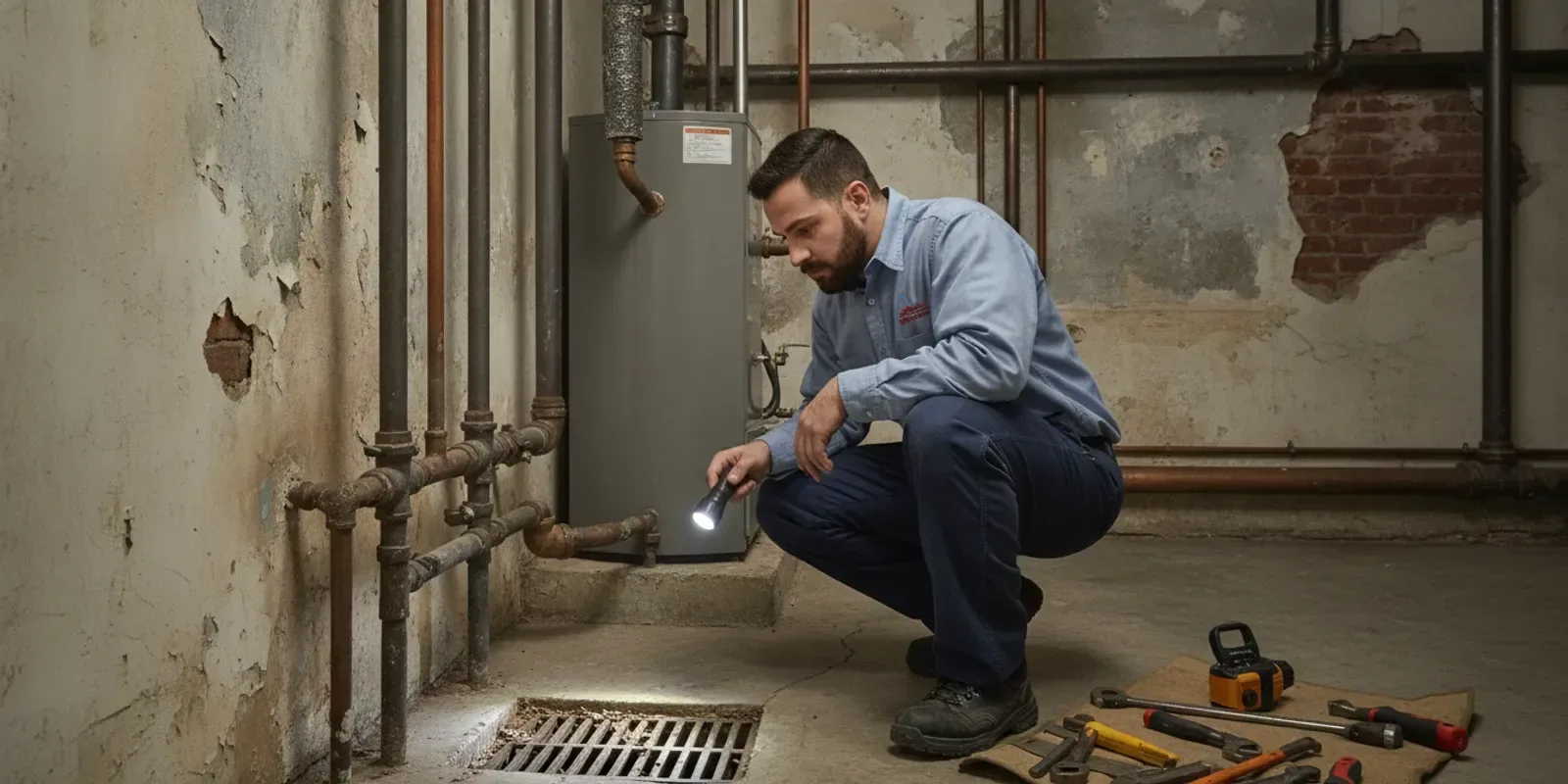
A technician can review the reported symptoms and determine which diagnostic steps are appropriate. The assessment may need to distinguish a fixture branch from a building drain or sewer line. The property layout, available access, and condition of the system shape what can be checked. A backup in one room does not automatically mean the city sewer is responsible, and a cleared fixture does not by itself establish that the underlying issue has been resolved.
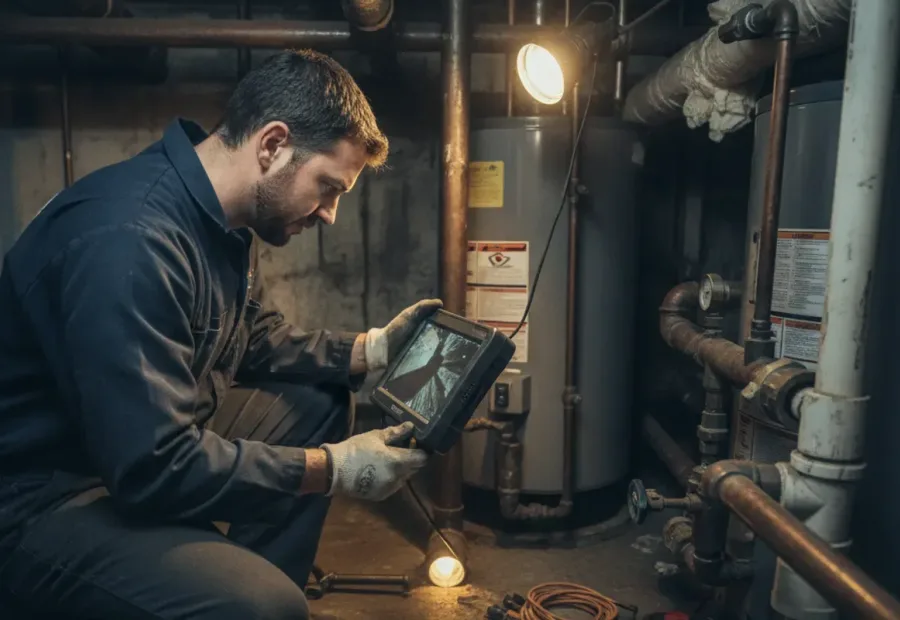
Depending on the findings, the next step may involve clearing a restriction, inspecting a sewer line, or discussing a repair. A camera inspection may be relevant when the technician determines that further viewing is appropriate and the line can be accessed. The goal is to match the work to the condition found, not to assume a specific repair from a phone description. Learn about sewer backup repair and sewer drain repair options.
Ask the technician to explain what was observed, what remains uncertain, and what work is proposed. If a repair is recommended, clarify which section of the system it addresses, whether additional access is needed, and whether any portions of the building should remain out of use while work is planned. The scope and cost depend on the actual condition and access. A technician must assess the job on site before providing a quote; symptoms alone are not enough for a confirmed price.
What should you do if the backup stops before help arrives?
Keep the appointment or update dispatch with the change rather than assuming the issue has disappeared. Tell the plumber which fixtures were affected, when the backup began, how long it lasted, and whether it stopped on its own or after any action. Share photos and the building’s incident notes if available. A temporary improvement can be useful information, but it does not prove that the line is clear or that the original cause has been addressed.
Continue to avoid unnecessary water use in the affected area until you receive guidance. In a multi-unit building, pass the update to the building contact so residents do not receive conflicting instructions. If wastewater returns, spreads, or affects another fixture, call back and describe the new condition. The changed pattern may matter when the technician decides what to assess.
What should owners plan after the immediate response?
Once the immediate condition has been assessed, separate urgent stabilization from any larger repair or restoration decisions. Ask who will communicate the next update to residents, which fixtures or rooms should remain unused, and what conditions would mean calling dispatch again. If the plumber recommends follow-up work, request a clear description of the proposed scope and the area it addresses. For a shared system, confirm who is authorized to approve work and arrange access; a resident may not be able to make decisions for common plumbing.
Keep the service notes with the building’s incident log, along with photographs taken safely, the dates and times of reports, and any instructions given about water use. Share relevant updates with the people affected without presenting an unconfirmed cause as settled. If another contractor or building representative is handling cleanup or damage documentation, coordinate access and timing so the plumbing assessment is not confused with restoration work. These are separate steps: addressing the plumbing condition does not itself document or resolve damage to floors, walls, or belongings.
Before returning fixtures to regular use, follow the technician’s direction and the building’s communication plan. If the backup recurs, report the new time, location, and affected fixture rather than relying on the earlier description alone. A concise record of what changed can help the next assessment focus on the current condition.
Frequently asked questions
Should I call a plumber if only one drain is backing up?
If the fixture is overflowing, wastewater is present, or the blockage persists, contact a plumber rather than continuing repeated DIY attempts. A single affected drain does not establish whether the problem is local or farther along the system. Explain whether other fixtures are working and avoid using the affected fixture while you wait for guidance.
Can I use a toilet in another room?
Do not assume another fixture is safe to use while a sewer backup is active. Pause water use and ask the plumber or building contact what is appropriate, especially if several fixtures, lower floors, or units are involved. The system layout and location of the restriction need to be assessed.
Can a plumber quote sewer work over the phone?
The cause and scope depend on property conditions and access. A technician needs to assess the job on site before providing a quote; a phone description can help explain urgency but is not a confirmed price.
What if wastewater is near an electrical outlet or appliance?
Do not enter the wet area or touch the equipment or switches. Keep others away and contact building staff and appropriate emergency assistance for the hazard. Tell the plumber about the electrical concern when you call.
If wastewater is backing up now, keep clear of the affected area, stop using plumbing, and call (212) 567-2000 for emergency help.