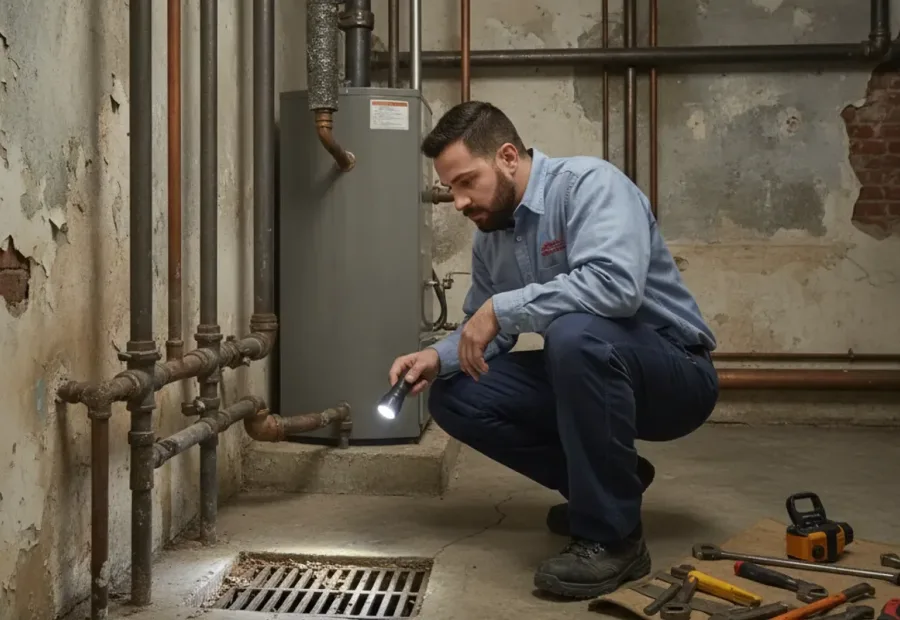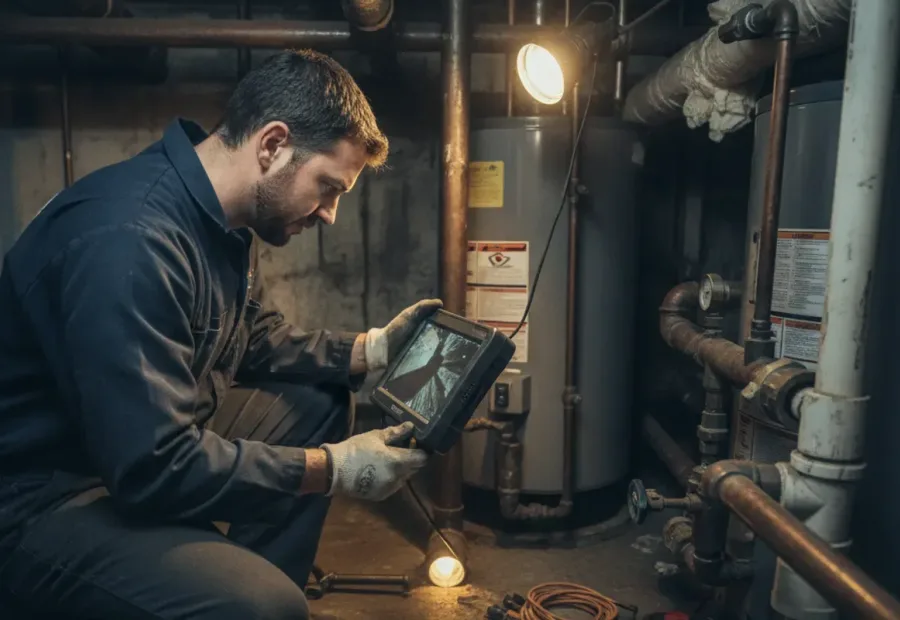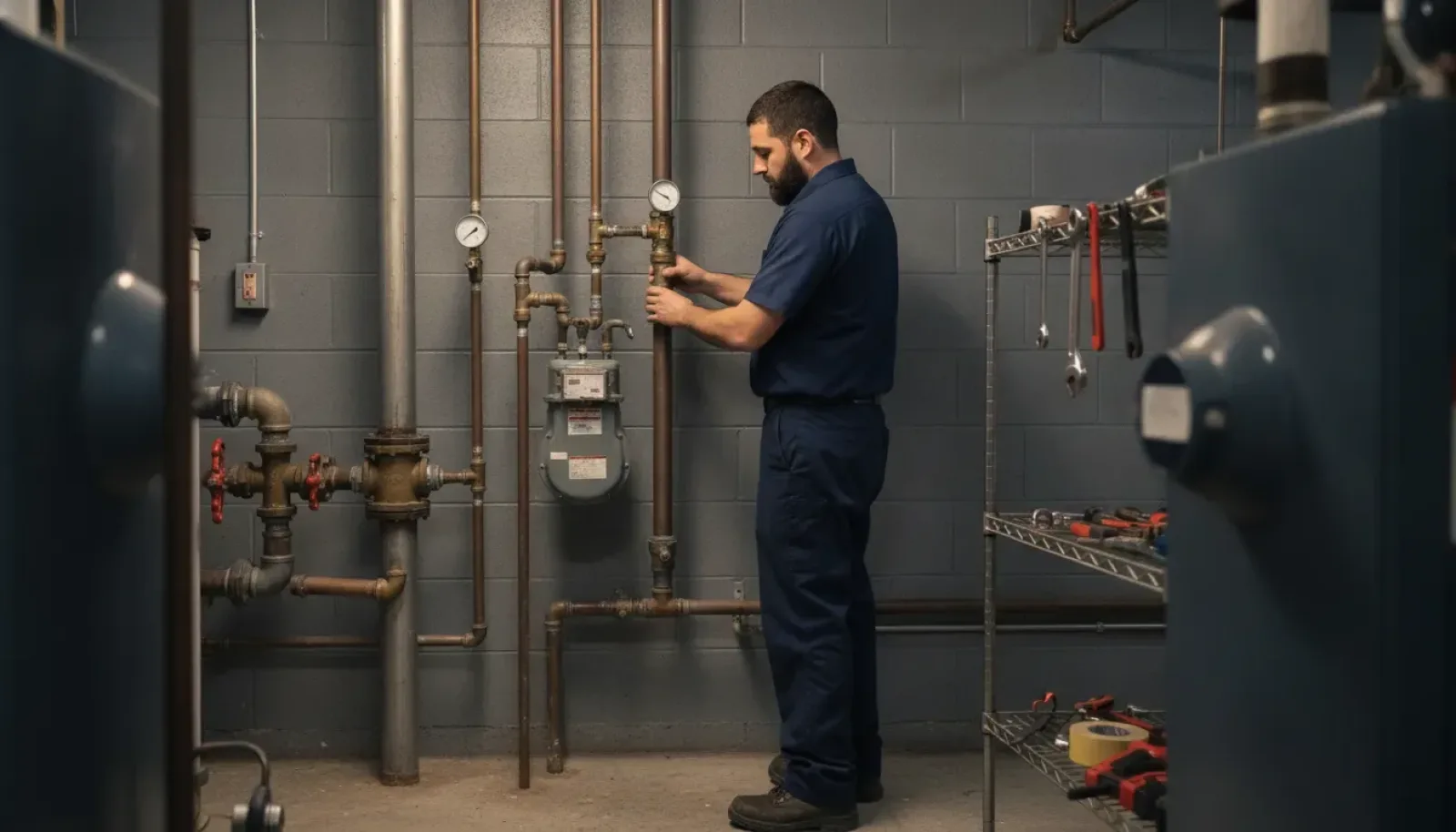
A Local Law 152 inspection is the periodic look at exposed gas piping that many NYC buildings must complete on a four-year cycle. The year is set by community district, not by the calendar date you last called a plumber. One- and two-family homes, and other buildings in occupancy group R-3, are outside the rule. Everything else starts with one question: does this building have to file, and for which year?
The answer is not the same for a Brooklyn walk-up, a Manhattan mixed-use building, and a Queens property with no gas service. NYC Department of Buildings publishes the cycle, the exemptions, and the filing steps. This guide walks through what an owner or manager should confirm before treating a notice, a deadline, or a gas-piping question as a routine service call. For the inspection itself, see our Local Law 152 inspections page. Scope still depends on the building.
Who needs a Local Law 152 inspection
Local Law 152 of 2016 requires a periodic gas piping inspection for most buildings. One- and two-family homes are out. So are other buildings in occupancy group R-3.
DOB also lists Department of Finance building classes that do not have to comply. Those include A0 through A9, B1, B2, B3, and B9, plus several others on the official list. Check the class on the building's property profile in the Buildings Information System. If that class looks wrong, DOB points owners to the Department of Finance to correct it. Do not assume a class from memory.
Two buildings on the same block can land on opposite sides of that line. A brownstone used as a one- or two-family home is not the same case as a small apartment building, a condo, or a mixed-use property with a store below and apartments above. Apartment owners and supers should not treat a house rule as a building rule. The obligation sits with the building, and the owner or managing agent is the person who has to file.
DOB keeps an address lookup and a downloadable property list, both labeled as updated on July 27, 2026, under Additional Tools on its periodic gas piping inspections page. Start there before you schedule anything. A neighbor's deadline is not yours.
When your Local Law 152 inspection year falls
Covered buildings are inspected at least once every four years. The window depends on the community district, which you confirm on the Department of City Planning site by searching the building address. DOB groups districts into sub-cycles. Cycle 2 has already closed for some groups. Cycle 3 is the next full round.
- Sub-cycle A, community districts 1, 3, and 10. Cycle 2 ran through December 31, 2024. Cycle 3 is January 1 through December 31, 2028.
- Sub-cycle B, community districts 2, 5, 7, 13, and 18. Cycle 2 ran through December 31, 2025. Cycle 3 is calendar year 2029.
- Sub-cycle C, community districts 4, 6, 8, 9, and 16. Cycle 2 is January 1 through December 31, 2026. Cycle 3 is calendar year 2030.
- Sub-cycle D, community districts 11, 12, 14, 15, and 17. Cycle 2 is January 1 through December 31, 2027. Cycle 3 is calendar year 2031.
District numbers repeat across boroughs. Manhattan, Brooklyn, Queens, and the Bronx each have their own community district 1, for example. "District 4" is not a borough. Look up the address, then match that district number to the row above. DOB's earlier cycles were extended by local law, so an old letter or a vendor's recycled chart can name a window that no longer matches the current table.
If the building cannot be inspected by the deadline for its reporting year, DOB allows a one-time 180-day extension requested through the online portal. The inspection still has to happen before that extension ends. An extension is not a pass, and it is not automatic.
Four situations, four different filings
Owners often ask for "the inspection" when the building is actually in a different filing path. DOB splits the work by what is in the building, not by how urgent the phone call feels.
Building situation
Who signs
What the owner files
No gas piping.
A design professional or a licensed master plumber.
A certification that the building has no gas piping.
Gas piping with active service.
The licensed master plumber who inspected.
A report in 30 days. A certification within 60 days.
Conditions need correction.
The same licensed master plumber.
A follow-up certification in 120 days. Use 180 days if more time was stated.
Piping is present but gas is off.
The utility, plus the owner.
Both statements go in the portal. No piping inspection until gas returns.
No gas piping at all. If the law applies but the building has no gas piping, a registered design professional or a licensed master plumber signs and seals a certification saying so. That certification goes to DOB. No piping inspection follows.
Gas piping, and the building is supplied with gas. Hire a licensed master plumber, or a qualified person working for one, to inspect the system. Within 30 days of the inspection, that plumber gives the owner a Gas Piping System Periodic Inspection Report. Within 60 days of the inspection, the owner submits a certification, signed and sealed by the plumber who conducted or supervised the inspection, through DOB's online portal.
Conditions that need correction. If the certification says conditions need correction, the owner files another certification within 120 days of the inspection stating that they were corrected. If the first certification said more time was needed, that follow-up certification is due within 180 days of the inspection. Corrections follow the NYC Construction Codes, including any required permits. Unsafe or hazardous conditions are a separate, immediate notice to the owner, the gas utility, and DOB. Those are not items to park until the filing window closes.
Gas piping is present, but gas service is off and no appliances are connected. The owner submits two statements through the portal. One comes from the utility. It states the last date gas was supplied and the date service ended. The other comes from the owner. It certifies that the building no longer receives gas and no longer has appliances connected to gas piping. DOB lists Con Edison at (800) 643-1289, option 2, and National Grid at nycdisconnects&reconnects@nationalgrid.com for the utility statement.
Before gas service starts again, hire a licensed master plumber. That plumber pulls a DOB permit and completes the gas inspections. The owner then submits a gas authorization request in DOB NOW and files the periodic inspection certification.
DOB states that failure to file the certification by the due date may result in a civil penalty of $5,000. That figure is the published penalty for a missed filing. It is not an inspection price, a repair estimate, or a fee we quote.
What to clarify before you hire anyone
The useful first conversation is about the building's filing position, not a generic visit. Have these answers ready, or know that you still need them:
- The DOB or property-profile result for this address, including the building class.
- The community district, and which cycle year that district is in right now.
- Whether the building has gas piping, active gas service, or appliances still connected to piping that is shut off.
- Any prior certification, report, violation, or utility shutoff letter, and the date on it.
- Who can give access to meters, basements, public corridors, and other exposed piping. Occupied apartments and locked rooms stall an inspection that looked simple on paper.
- Whether anyone has already requested the one-time 180-day extension for this reporting year.
Check the plumber's license before you hire. DOB tells owners to use its license search and to review disciplinary and voluntary-surrender records. When permitted gas work is part of the scope, we coordinate it under Master Plumber Licence #1332. The inspection, the report, and any later correction are different steps. A finished walkthrough is not the same thing as a certification sitting in the portal.
We do not treat every property as if it owes the same filing. Compliance testing for this building may also include annual backflow preventer testing or NYC plumbing code compliance inspections. Those are separate requirements. A Local Law 152 inspection does not replace them, and a backflow test does not satisfy this gas-piping filing.
If the report turns up a condition that needs permitted gas work, the next scope may be gas line installation and repair. If the building already has an open plumbing violation, violation removal and compliance corrections is a different job from the periodic certification. Say which document you are holding when you call. It changes what gets scheduled.
How an owner moves from notice to filed certification
A notice, a managing agent's email, or a vendor postcard is a prompt to look the building up. It is not proof of the due year. Work the filing in order so a busy super is not hunting for a meter room on the last week of December.
- Look up the address. Use DOB's property list or the address search, and read the building class on the property profile. If the class is one of the exempt finance classes, stop and keep that printout with the building file.
- Name the community district. Search the address on the Department of City Planning site. Match the district number to the current sub-cycle, and write the year on the file. Do not reuse a chart from cycle 1.
- Decide which of the four paths applies. No gas piping, active gas service, conditions already flagged for correction, or piping with service off and no connected appliances. Each path has its own signer and its own portal upload.
- Book access before you book the date. Exposed piping in basements, meter rooms, and public corridors has to be reachable. Tell occupants what the visit is, and who will be in the building. A locked room is the usual reason a simple inspection gets rescheduled.
- Read the report when it arrives. The plumber has 30 days to give you the inspection report. Unsafe or hazardous conditions are called in immediately to you, the utility, and DOB. Do not wait for the certification deadline to deal with those.
- File on the owner's clock, not the plumber's. The certification is due within 60 days of the inspection. Corrections add a 120-day or 180-day follow-up. Put those dates on a calendar the managing agent actually checks.
If the reporting year is about to close and access is still unresolved, ask about the one-time 180-day extension before the deadline, not after a penalty notice. You still have to finish the inspection inside the extension.
Records worth keeping with the building file
The portal submission is the filing. The paper around it is what lets the next manager answer a question without starting over. Keep a short packet, even when the result was "no gas piping."
- The DOB address result and the finance building class you relied on.
- The community district and the cycle year you matched it to.
- The inspection report, the certification, and any correction certification, with the dates DOB accepted them.
- Utility letters if gas service is off, including the last supply date.
- Permit numbers for any correction work, kept separate from the periodic certification.
- The name and license of the plumber who signed. Confirm it was active when the report was issued.
Hand that packet to a new super or a new managing agent. A building that changed managers mid-cycle is a common reason the certification exists and nobody in the office can find it. We can look at the documents you already have and tell you which filing path they point to. We cannot reconstruct a missing portal submission from memory.
What this guide does not decide
Nothing here tells you that your building is due, exempt, or late. District borders, building class, and gas-service status are looked up per address. A managing agent with several buildings can easily have one property in a 2026 window and another whose next window is 2028 or 2029. Marketing priority for us is Brooklyn, Queens, and Manhattan. The cycle still follows the district, including buildings we serve in the Bronx and Staten Island.
Building service plans do not fold regulatory inspections into the monthly dues unless a written agreement says so. A Local Law 152 inspection is one of those compliance items. Ask before you assume a plan visit covers the filing. If you smell gas, hear a leak, or see an active emergency, that is a dispatch call, not a deadline question. Call (212) 567-2000. Arrival depends on traffic, access, and current volume. We do not promise a fixed response time.
For a planned inspection or a question about which filing path fits the building, use the contact form. That request is a conversation we confirm. It is not an appointment and not instant coverage.
Frequently asked questions
Does every NYC building need a Local Law 152 inspection?
No. DOB excludes one- and two-family homes and other occupancy group R-3 buildings, and it lists finance building classes that do not have to comply. Look up the address on DOB's property list rather than copying a neighboring building.
How often is the inspection due?
At least once every four years, in the window tied to the building's community district. Some districts are in the 2026 or 2027 window now. Others are not due again until 2028 or 2029. Confirm the district before you pick a year.
Who is allowed to do the inspection?
A licensed master plumber, or a qualified individual working for one. If the building has no gas piping, a registered design professional or a licensed master plumber can certify that fact instead.
What does the owner file, and when?
After an inspection of a building that has gas service, the plumber gives the owner a report within 30 days. The owner submits the signed and sealed certification within 60 days of the inspection. Corrections can add a 120-day or 180-day follow-up certification. A building with no gas service files utility and owner statements instead.
What if we miss the filing date?
DOB says failure to file the certification by the due date may result in a civil penalty of $5,000. A one-time 180-day extension can be requested in the portal if you cannot inspect by the reporting-year deadline, and the inspection still has to be done before the extension ends.