A sewer line clean out is an access point that lets a plumber reach drain or sewer piping for assessment or cleaning. If you are searching for a sewer line clean out because a drain keeps stopping, the cap alone will not tell you what caused the problem. Knowing where the access point is, whether it is reachable, and which fixtures are affected can help you describe the situation and prepare for service.
Is it backing up? Call us now.
What is a sewer line clean out?
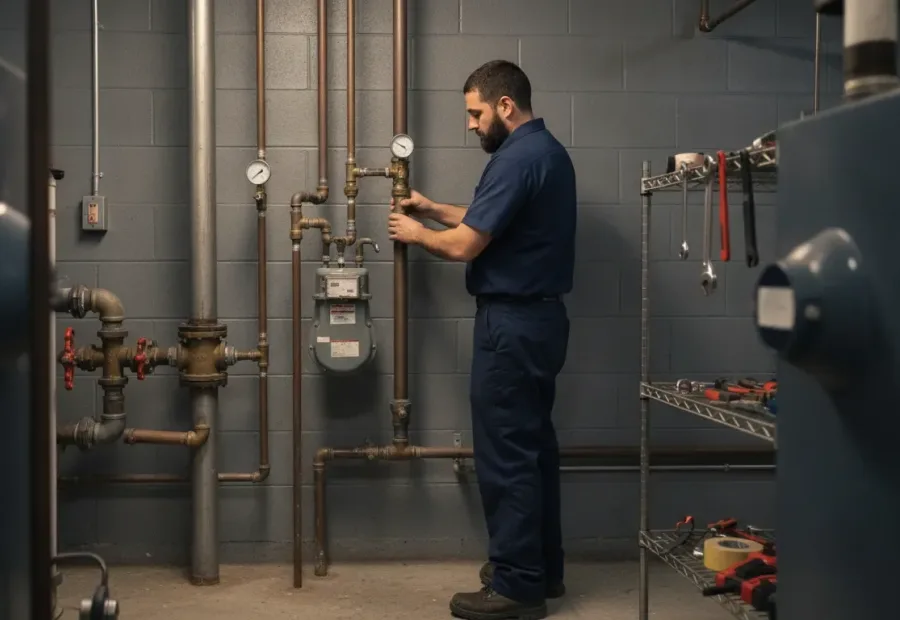
A clean out is a capped opening connected to drain or sewer piping. It gives a plumber a point of access, rather than requiring all work to begin through a fixture opening inside the property. Depending on the layout, an access point may be indoors, in a basement or utility area, near a building foundation, or outside in a yard or pavement area. Some properties do not have an obvious or readily accessible clean out.
The clean out is not a filter, pump, or device that prevents blockages. It is an access feature. A plumber may use it as part of an assessment or cleaning approach, depending on the piping layout and conditions observed. The presence of a clean out does not establish whether a stoppage is in a branch drain, the building sewer, or another part of the system.
Why does access matter when a sewer line keeps stopping?
When a drain backs up more than once, the location and pattern of symptoms help guide the assessment. An accessible opening may give a plumber a practical route to reach piping. But the symptom pattern still matters. A clean out that is blocked by storage, buried, damaged, or difficult to reach may need attention before it can be used. The cap's location is one piece of information, not a diagnosis.
- One fixture is affected: The issue may be limited to that fixture or its branch piping, although symptoms alone cannot confirm the location.
- Several fixtures are affected: A shared drain or sewer route may be involved, especially if symptoms occur together.
- Wastewater is coming up: Treat an active backup as urgent. Keep people away from contaminated water and call for service.
- The problem returns after clearing: A recurring stoppage merits assessment of the underlying cause rather than repeated attempts to clear symptoms.
For example, if a kitchen sink drains slowly but other fixtures work normally, record that distinction rather than labeling it a sewer failure. If a basement floor drain and multiple fixtures begin backing up at about the same time, note the timing and each affected location. Those details help the plumber assess where to begin, but do not prove the blockage location by themselves.
Where might a clean out be located?
Building age, renovations, and the route of the sewer piping all affect access. A clean out may be visible in a basement or service area. In another property it may be outdoors or covered by landscaping, a removable access cover, or pavement. Multi-unit buildings may have shared or restricted service spaces that require coordination with a superintendent or property manager.
Do not dig based on a general location guess. Check building records or ask the owner, manager, or superintendent whether the location is documented. If no access point is apparent, a plumbing professional can help determine where service access may be available. A government guide explains that identifying the property line is part of locating a property-line cleanout before excavation: property line cleanout process. That guidance is specific to its jurisdiction; NYC property layouts and responsibilities can differ.
How can you check and prepare without opening it?
Start with observation, not removal. If the clean out is in a safe, accessible area, look for it without moving heavy objects or disturbing soil or pavement. You can make the route accessible by moving loose items or arranging entry to a locked utility area if you are authorized to do so. Do not remove the cap, force a stuck fitting, or excavate around a suspected location.
Take a photo from a safe distance if it helps show where the access point is and what surrounds it. Note whether the cap looks cracked, loose, buried, or surrounded by water. A photo cannot show the inside condition of the pipe, but it may help explain access constraints to the person arranging service.
Avoid pouring chemical drain cleaners into a line as a substitute for diagnosis. Opening a clean out during a blockage can release wastewater; the arrangement and pressure conditions may not be apparent from outside. If wastewater is actively backing up, keep people and pets away from the affected area and contact a plumber instead of trying to open the piping yourself.
What should you record before requesting an assessment?
A concise timeline and symptom list can make an initial service conversation more useful. Separate what you observed from what you suspect. For instance, say that two bathroom fixtures gurgled after a floor drain backed up, rather than concluding that the main sewer is blocked. Gather details such as:
- Which fixtures or floor drains are affected, and which still work?
- Is water or sewage actively backing up, or has the issue stopped for now?
- When did symptoms begin? Did they appear together or one at a time?
- Has the issue occurred before, and how long did any previous improvement last?
- Is the property a private home, condo, brownstone, townhouse, or multi-unit building?
- Where is the clean out, if known, and is it visible and accessible?
- Are there entry rules, locked areas, or a superintendent who should coordinate access?
Tell the plumber about prior work if you know what was done. A record such as “the line was cleared last month and the backup returned after two weeks” is more useful than a broad label like “bad sewer.” Do not assume that a past clearing method or result explains the current condition.
How is a clean out different from cleaning or diagnosis?
These are related but separate things. The clean out is an access point. Cleaning is work performed on piping to address an obstruction or buildup. Diagnosis is the process of assessing the symptoms and line conditions to determine an appropriate next step. A clean out may be used to reach piping, but it does not clean the line by itself or reveal the full condition of the pipe.
Clearing a stoppage may restore flow without establishing why the blockage occurred or whether another condition remains. Conversely, a plumber may determine that a different access route or further assessment is more suitable for the property. The method depends on the piping and the conditions found; a general article cannot determine which approach is right for an individual line.
If a stoppage returns, explain what work was done before and how long the improvement lasted. Ask what the assessment established, what remains uncertain, and whether any additional diagnostic step is recommended. A temporary improvement should not be treated as a guarantee that the underlying cause will not recur.
What should owners and building managers coordinate?
In a multi-unit property, notify the building manager or superintendent when shared plumbing may be involved. Confirm who can authorize work and provide access to basements, utility rooms, or exterior areas. If several units report symptoms, record which apartments and fixtures are affected and whether the symptoms started around the same time.
Consider a simple building log: date and time reported, unit or common area, fixture involved, whether water was actively backing up, and any action already taken. Keep the entries factual and avoid attributing responsibility before the line is assessed. This helps distinguish a single-unit report from a pattern across the building and gives the service professional a clearer starting point.
For a private home, clear the route to the suspected access point and keep children and pets away from an active backup. Do not remove fixtures or excavate based only on an online description. If outside access may be near a property boundary, confirm location and responsibility before digging.
When should you call for help?
Call promptly when wastewater is actively backing up, several fixtures are affected, a basement drain is overflowing, or a stoppage returns after previous work. Avoid using affected fixtures if continued use could add water to the backup. If the problem is not active but has happened repeatedly, arrange a planned assessment and explain the history.
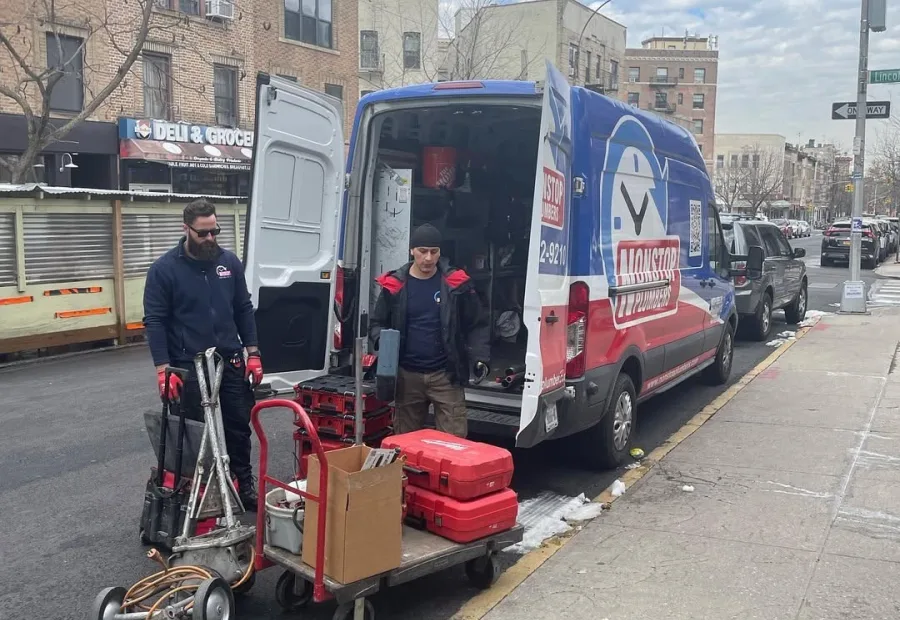
Nonstop Plumbers provides emergency plumbing and drain and sewer services in New York City. Arrival depends on traffic, access, and current service volume; do not assume a fixed arrival time. For a line-specific scope, the plumber must assess the conditions at the property. You can review the company’s sewer line cleaning information for related drain and sewer work.
For nonurgent planned work or an estimate, use the contact page. A form submission is a request, not a confirmed appointment. For active leaks, flooding, backups, or no-water issues, call dispatch at (212) 567-2000.
Request an on-site assessment for planned sewer-line work
Frequently asked questions
Is a sewer clean out the same as a drain?
No. A clean out is an access opening connected to piping. A drain is part of the system that carries wastewater from fixtures. The access point can help a plumber reach piping, but it does not carry out cleaning on its own.
Can I open a clean out myself?
It is safer not to open one during a blockage. Wastewater may spill out, and a cap may be stuck or damaged. Keep clear of the area and ask a plumbing professional to assess it, especially if sewage is present.
Does every NYC property have an outdoor clean out?
No. Layouts differ. Access points may be indoors, outdoors, concealed, or not readily identifiable. Building records and an on-site assessment are more useful than assuming a standard location.
Will a clean out fix a recurring sewer blockage?
No. It provides access for assessment or service. Clearing a blockage may restore flow, but the cause of a recurring stoppage may require further evaluation.
What is the next step?
If a backup is active, call (212) 567-2000 for emergency help. For a recurring but nonurgent stoppage, note the affected fixtures, prior work, and cleanout location if known, then request an assessment so the line and access conditions can be evaluated.