The signs of a hidden water leak behind a wall may appear before you see a puddle or major damage. A new stain, musty odor, soft drywall, unusual humidity, or a faint running-water sound can all justify a closer look. In a New York City apartment or building, document what you notice and when it happens, then arrange an inspection rather than cutting into the wall yourself.
Review plumbing service options
What are the early signs of a hidden water leak?
No single clue proves that a plumbing pipe is leaking. Moisture can also come from condensation, a roof or façade issue, a heating system, a neighboring apartment, or a spill. Still, several changes deserve prompt attention, especially when they recur, spread, or appear near a fixture.
- New stains or discoloration: Yellow, brown, gray, or irregular marks may form on paint, plaster, wallpaper, a ceiling, or trim. A mark that darkens, expands, or returns after drying is more concerning than an old, unchanged stain.
- Peeling, bubbling, or cracking: Paint may blister, wallpaper may loosen, and drywall or plaster may swell. A surface that feels soft, crumbly, or unusually cool can indicate moisture nearby. Do not press hard on a weakened area.
- A persistent musty odor: A damp, earthy smell that remains after ordinary cleaning can point to moisture in a concealed space. Odor alone cannot identify the source, but it becomes more useful when combined with a stain or surface change.
- Unexplained dampness or humidity: A wall, floor edge, baseboard, or cabinet may feel damp while nearby surfaces remain dry. Condensation can create similar symptoms, so compare the affected area with surrounding surfaces and record when the change appears.
- Dripping, trickling, or running-water sounds: Listen when faucets, toilets, appliances, and other fixtures are not being used. Sound travels through pipes and framing, so it may identify a general area but cannot precisely locate the source.
- Changes near fixtures or shared walls: A mark below an upstairs bathroom, beside a kitchen, near a radiator connection, or along a plumbing chase may help guide an inspection. In a multifamily building, the source may be in another unit or a shared system.
- Unexpected water use: A meter that changes while known fixtures are off can be a clue in some properties. Shared meters, building equipment, and intermittent leaks make this check difficult to interpret, so it is not proof of a wall leak.
The EPA WaterSense leak facts guide notes that household leaks can waste substantial amounts of water. That general information does not establish the cause of a particular stain, odor, or sound, so a property-specific assessment is still needed.
How can you check the area safely?
You can gather useful information without opening a wall. Safe observations help a plumber and, in a managed building, help the right people coordinate access.
- Photograph the affected area. Take a clear picture that includes nearby trim, fixtures, or corners for context. Note the date and take another photograph from the same position if the mark changes.
- Record the pattern. Write down whether the odor, sound, or dampness appears after a shower, sink use, laundry, toilet flush, heating cycle, or rain. Do not deliberately run water if doing so could worsen active damage.
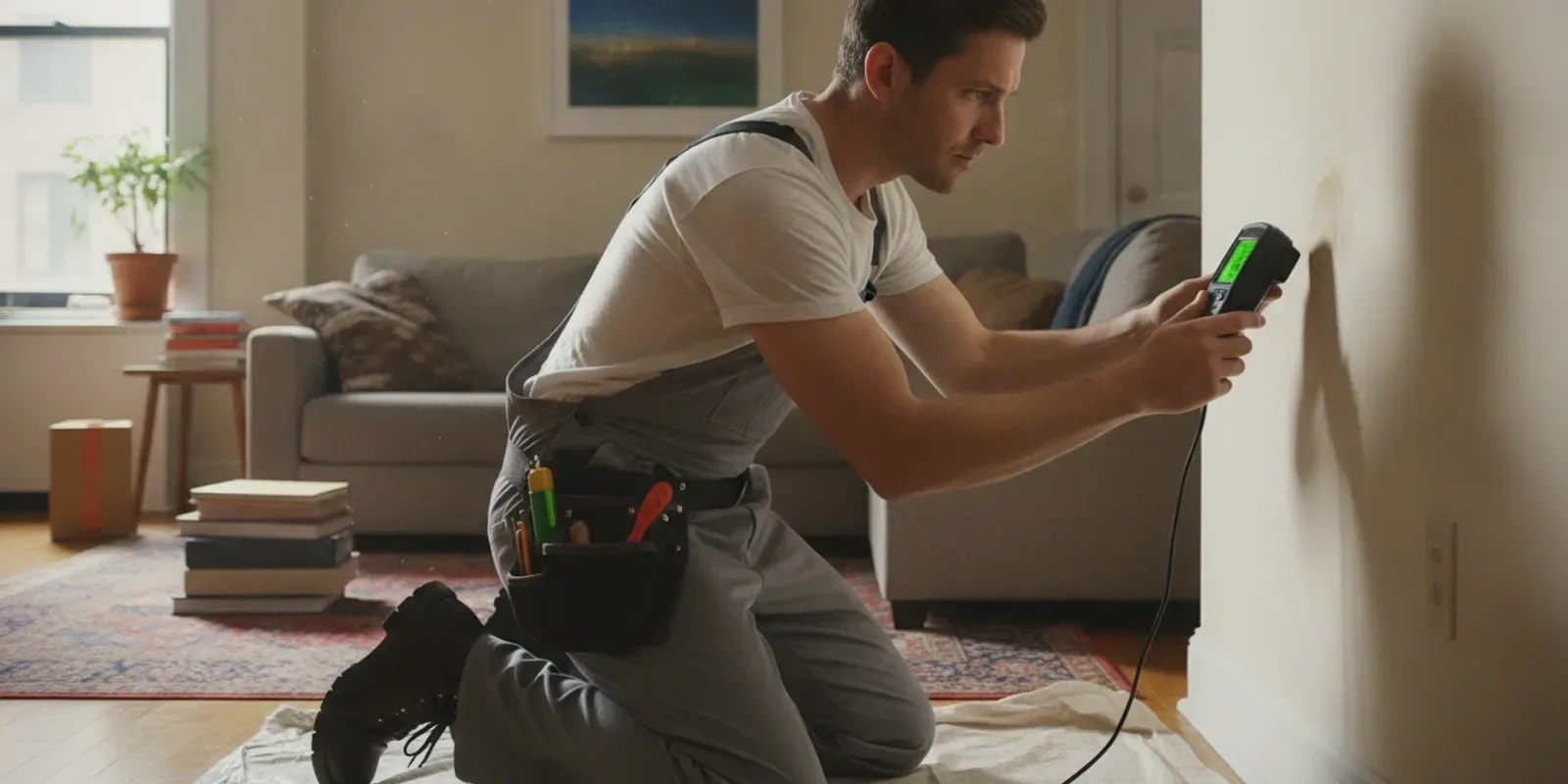
- Look only at accessible plumbing. Check for visible drips under sinks and around exposed supply connections. Do not remove wall panels, cabinets, access covers, or fixtures unless a property representative or qualified professional directs you to do so.
- Keep people away from hazards. If water is near an outlet, electrical equipment, a ceiling light, or a service panel, do not touch the wet equipment. Move away and follow the building’s emergency procedure.
- Notify the appropriate building contact. Renters and apartment residents should contact the superintendent, property manager, owner, or maintenance contact promptly. Access to an adjacent unit or common area may be necessary.
Do not drill, cut, or remove drywall to search for a leak. Pipes, wiring, structural components, and other building systems may be behind the surface. Avoid painting over a stain or sealing the area before the source is understood; concealment can make a recurring problem harder to track.
When is a hidden leak an emergency?
Call emergency dispatch for active flooding, a burst pipe, water that is spreading quickly, a serious backup, loss of water, or water near electrical equipment. Keep clear of unsafe areas and use the building’s shutoff procedure only if you know it is safe and authorized. If there is immediate danger to people, contact emergency services.
Non Stop Plumbers advertises 24/7 emergency dispatch across Manhattan, Brooklyn, Queens, the Bronx, and Staten Island. Routing and arrival depend on severity, borough, access, traffic, restrictions, and current emergency volume. No minute-specific arrival time or universal response promise should be assumed.
A dry wall does not always mean the concern is over. Some leaks are intermittent, and a visible mark can remain after the source changes. Escalate a recurring stain, odor, sound, or surface change even when no water is visible at the moment.
How can you distinguish a plumbing leak from another moisture source?
Location and timing can provide clues, but they do not confirm a cause. Moisture that appears after a shower may relate to a fixture, drain, supply line, or condensation. A mark that changes after rain may involve the building exterior or roof. A damp area near a heating component may have a different source than one below a bathroom.
Do not assume the nearest fixture is responsible. Water can travel along framing, floors, ceilings, and pipework before it becomes visible. In an apartment building, the source can be above, beside, or behind the affected unit. An inspection and coordinated access may be needed to separate an individual fixture issue from shared piping or another building system.
What information should you provide during an inspection?
Explain when the sign began, whether it is getting larger, and what activities seem to make it appear. Tell the technician whether the wall borders a bathroom, kitchen, laundry area, radiator, roof, neighboring unit, or plumbing riser. Share photographs and note any shutoff, backup, or prior repair that may affect the investigation.
The inspection may include accessible fixtures, supply lines, drains, the affected wall or ceiling, and nearby building systems. The appropriate diagnostic approach depends on construction, materials, location, and evidence. An opening in the wall or permanent repair should not be assumed to be necessary or included in every visit.
Before work begins, clarify the suspected scope, access needed, and proposed next steps. Ask whether diagnosis, opening and restoring a wall, parts, materials, and follow-up repairs are separate items. In a multifamily property, coordinate resident access, common-area entry, shutoffs, work windows, and communication with management.
What should homeowners and building managers do next?
Homeowners can document symptoms, protect belongings from active water, and request plumbing service information for a planned assessment when the issue is not active. Property managers and supers should preserve the timeline, identify affected units, notify residents, and determine whether common areas or neighboring apartments require access.
Use planned-service intake for a nonurgent concern, remodeling, construction, or a site-specific project. Emergency dispatch is the appropriate route for active leaks, flooding, bursts, backups, or loss of water. The company’s company information can provide additional context, but service availability and the right scope should be confirmed at intake.
Frequently asked questions
Can a wall leak exist without visible water?
Yes. A slow or intermittent leak may leave only a stain, odor, soft surface, or changing humidity at first. A dry moment does not rule out moisture behind the wall.
Should you open the wall to find the leak?
No. Cutting into drywall can contact wiring, pipes, or other building components and may worsen damage. Document the evidence and let a qualified professional determine what access is appropriate.
What if the suspected leak is in an apartment building?
Notify the superintendent, manager, owner, or maintenance contact and explain which units or common areas may need access. Water can travel from another apartment or a shared system, so coordination may be necessary.
Call emergency dispatch about active water loss
If the wall is dry and the signs are limited, keep tracking them and arrange a planned inspection if they persist or return; if water is actively spreading or near electrical equipment, move away and call emergency dispatch.