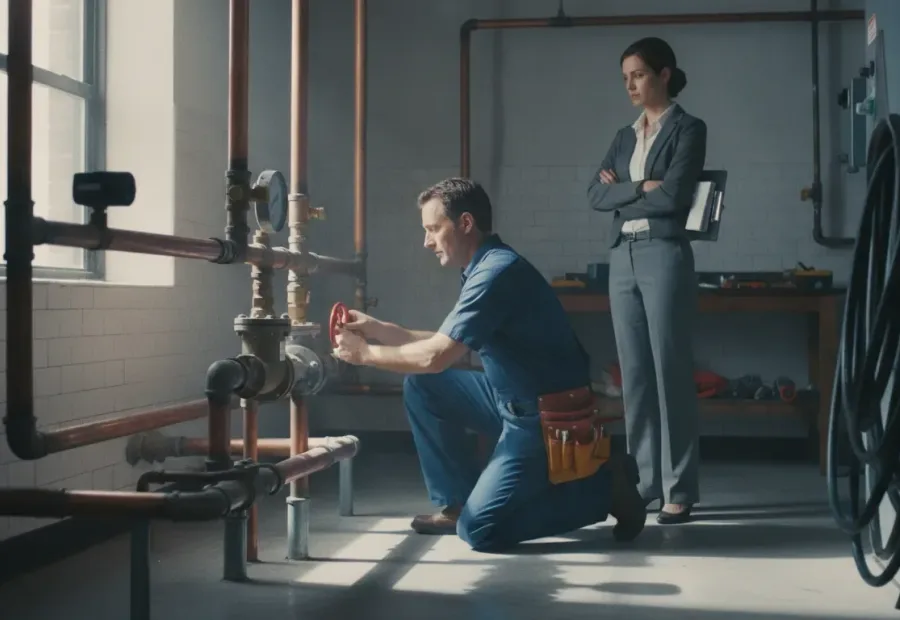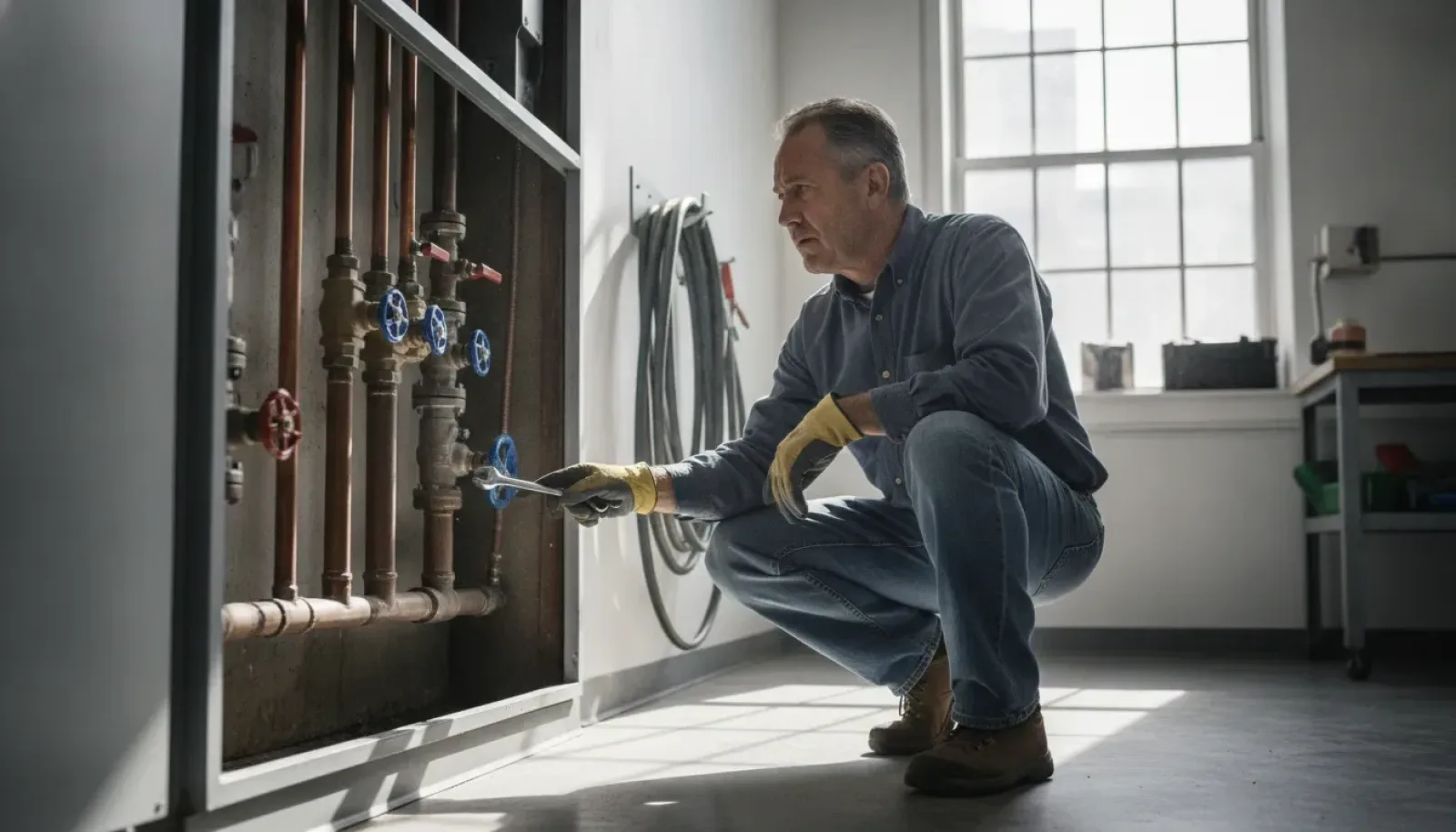
In an occupied NYC apartment building, a small plumbing observation can become a resident complaint. An access problem, or a larger repair if it is not recorded and assigned. A useful maintenance routine gives managers and supers one repeatable way to check common systems. Document conditions, coordinate planned work, and escalate active problems without treating every property the same.
Plan a building maintenance evaluation
An apartment building plumbing maintenance checklist should cover the building's water-using fixtures and systems, visible leaks, drains, accessible shutoffs, water-use trends, maintenance records, and follow-up responsibilities. The EPA describes multifamily water assessments as an inventory of fixtures, appliances, systems, and management practices, which is a practical foundation for organizing the work: EPA WaterSense multifamily guidance.
The right cadence depends on the building, equipment, access, occupancy, and existing service agreements. Start by defining what staff can safely observe and what requires qualified plumbing work, then build the checklist around the systems and records your property actually has.
What belongs on an apartment building plumbing maintenance checklist?
A whole-building checklist is a recurring record of what the property has, what staff can safely observe, what needs professional inspection, and what requires follow-up. It should cover more than individual fixtures. EPA WaterSense describes a multifamily water assessment as an inventory of water-using fixtures, appliances, systems, and management practices. That broader view helps an owner or manager prioritize maintenance instead of reacting only after a resident reports a problem.
Build a usable system inventory
Start with the building's plumbing map and update it when systems or units change. Identify the domestic water service, risers, accessible supply piping, common-area fixtures, unit fixtures within the property's responsibility, drains, cleanouts, shutoff valves, and other water-using equipment. Record where each component is located, which areas it serves, and whether access is clear. The checklist should also distinguish components staff may visually observe from work that requires a qualified plumbing professional.
Check for leaks, drainage issues, and moisture
Include common kitchens, bathrooms, mechanical areas, utility spaces, and accessible plumbing routes. Look for dripping or continuously flowing water, unexpected drainage, staining, dampness, or other signs that warrant investigation. EPA recommends incorporating leak detection into operations and maintenance and fixing identified leaks quickly. Its building moisture guidance specifically addresses plumbing systems and is intended for people who operate buildings and perform preventive maintenance and repairs.
Record the location, observed condition, date, and immediate protection taken. A checklist should not instruct residents or untrained staff to operate unfamiliar valves or open concealed systems. Instead, note the affected area and escalate it through the property's established process.
Document shutoffs, actions, and escalation
Keep valve locations, service notes, inspection findings, repair recommendations, photographs where appropriate, and unresolved items together. Include the person responsible for follow-up and the condition that changes routine maintenance into urgent dispatch, such as an active leak, flooding, burst, backup, or loss of water. The right cadence depends on the building, its systems, occupancy, access, and applicable requirements. Treat this checklist as a property-specific operating tool, not a universal code schedule or a substitute for a scoped inspection.
For background on EPA's multifamily assessment approach, see EPA WaterSense guidance for multifamily housing and its building moisture control guidance.
Start with a system map, access plan, and safe responsibilities
Before assigning recurring tasks, map the building's plumbing system as it exists on site. Note the main service entry, risers, accessible domestic water valves, shutoffs, exposed pipes, mechanical rooms, cellar or other service areas, and any locations that require unit entry. Record what each valve or access point appears to serve, but do not guess when labeling is unclear. A usable map helps the manager decide which observations staff can make and which work needs a qualified plumbing professional.
Access is part of the maintenance plan, not an administrative afterthought. In an occupied high-rise, work may require coordination with the superintendent, doorman, freight elevator schedule, residents, and building access rules. Identify units or common areas that may need entry, provide resident notices when appropriate, and reserve a shutdown window that matches the affected system. Keep a written record of approvals, notifications, access limitations, and any system that could not be inspected.
Keep observation separate from repair
Building staff can safely report visible moisture, staining, unusual noise, damaged insulation, dripping fixtures, inaccessible rooms, or a valve that appears difficult to operate. Photos, location details, and the time of observation can make a service request more useful. Staff should not force a valve, open unfamiliar equipment, alter pressure controls, or perform gas, fire-system, or concealed-pipe work. Those tasks require the appropriate licensed or specialized professional and may need additional coordination.
Nonstop Plumbers lists visual inspection of accessible building plumbing pipes and exercising accessible domestic water valves among its building-plan maintenance tasks. That published scope is not a universal checklist or a promise that every component is included. For context on scheduled building plumbing maintenance, review the plan details and confirm the property's actual systems, access conditions, exclusions, and approved scope. This article is educational; a building-specific evaluation should determine what can be inspected, when work can occur, and who is authorized to perform it.
How to use an apartment building plumbing maintenance checklist each month
A monthly review can be a practical repeatable example, not a universal rule. Adapt the timing and depth to the building's age, systems, occupancy, access, and maintenance agreement. Keep the work focused on observation, documentation, and timely escalation.
- Walk accessible plumbing areas. Inspect mechanical rooms, kitchens, bathrooms, and other locations with water-using fixtures or equipment. Look for dripping or constantly flowing water, damp surfaces, staining, corrosion, or unusual moisture around accessible pipes and connections. EPA recommends building leak detection into operations and maintenance, then addressing identified leaks promptly. See the EPA leak-detection guidance for the inspection principle.
- Check common fixtures and equipment for abnormal operation. Note toilets, faucets, valves, and other fixtures that run, drip, or fail to shut off normally. Equipment should not generally consume water continuously, so a constant flow can justify a closer inspection by an appropriately qualified professional. Also note water moving into a drain when no active use or scheduled discharge explains it.
- Review drains without performing unsafe work. Record slow drainage, recurring odors, standing water, or repeated complaints in common areas. Do not dismantle unfamiliar traps, enter restricted spaces, or use aggressive chemicals as a substitute for diagnosis. If the building needs planned investigation or cleaning, route it to qualified drain and sewer services.
- Observe accessible shutoffs and valves. Confirm that relevant domestic-water valves are identifiable and that access is not blocked by storage or other obstructions. Do not ask residents or untrained staff to operate unfamiliar common-area valves. A service professional can assess and, where appropriate, exercise accessible domestic water valves as part of a property-specific maintenance scope. Nonstop Plumbers lists this alongside visual inspection of accessible building plumbing pipes.
- Check for water-use anomalies. During a low-occupancy period, note whether the water meter is moving unexpectedly. Compare the month's usage and cost with prior records, and investigate unexplained spikes rather than assuming they are normal. EPA recommends checking meters during low activity and tracking water use over time to identify possible leaks or malfunctions.
- Record the finding and the next action. Log the date, location, observation, affected area, resident or staff report, photo when appropriate, and person responsible for follow-up. Mark each item as monitor, schedule planned service, or escalate urgently. Keep records specific enough to support access planning, resident notices, and any necessary shutdown coordination.
- Escalate conditions that are no longer routine. Active leaks, flooding, bursts, backups, or loss of water belong in emergency dispatch rather than a routine contact-form request. For less urgent concerns, preserve the records and arrange planned evaluation. The checklist should help the building identify the next safe action, not encourage improvised repairs.
Quarterly checks for drainage, fixtures, and water use
A quarterly review should look for patterns across the building, not simply repeat every item from the monthly walk-through. In an NYC multifamily property, compare recent maintenance notes, resident reports, work orders, utility bills, and meter readings. The goal is to decide whether an observation is isolated, recurring, or significant enough to justify a planned inspection.
Look for moisture and drainage patterns
Walk accessible exterior and common areas after ordinary operating periods and note puddles, persistently wet ground, damp walls, staining, or unusual odors. Areas that remain wet well after rain can point to leaking irrigation equipment or water lines. Review whether the same floor, courtyard, cellar area, or drain appears in multiple reports. Exterior drain inspection may be part of a building service scope, but the customer's published plan does not specify how often that inspection occurs. Set the review interval based on the property's conditions and confirm the intended scope rather than treating a quarterly cadence as a universal requirement.
Compare meters, submeters, and costs
Check the main water meter during a low-occupancy period when normal fixtures and equipment should be quiet. Unexpected movement can indicate a leak or equipment problem. Then compare water use and water costs with prior periods, accounting for occupancy, weather, seasonal operations, and known work. A sudden spike deserves investigation even when no visible leak is present.
Where the building has submeters or monitoring devices, review major water-using systems, tenant spaces, irrigation, cooling equipment, or other separately measured areas. Tracking those readings over time can reveal an anomaly that a whole-building bill hides. The EPA commercial water-waste checklist provides a useful reference for meter, submeter, and water-use review.
Decide what needs planned attention
Record the location, evidence, date, meter condition, related work orders, and access limitations. If a pattern repeats, involves an accessible common system, or cannot be explained by occupancy or planned work, coordinate a property-specific inspection. Confirm whether the visit is observation, preventive maintenance, or separately scoped repair. If the review identifies active flooding, a burst, a backup, or loss of water, stop treating it as a quarterly item and use the company's emergency plumbing services path instead.
Annual review: records, compliance, and repair priorities
An annual review turns scattered service notes into a practical plan for the coming year. Gather maintenance logs, work orders, utility bills, resident reports, inspection records, and notes about recurring leaks, slow drains, pressure changes, or areas that were difficult to access. The goal is not to assume that every building follows the same schedule. It is to identify patterns and decide which items need observation, planned repair, further testing, or a site-specific evaluation.
Compare records with water-use trends
Review water use and costs against the same property's prior periods, noting unexplained spikes, persistent increases, or changes after a repair. EPA WaterSense says a multifamily Water Score uses one year of metered utility bills and compares a building's water use with similar properties nationwide. That comparison can provide context, but it does not replace an inspection or prove the cause of a change. EPA also describes a water assessment as an inventory of fixtures, appliances, systems, and management practices that can help prioritize efficiency projects and management improvements.
Pair the numbers with the building record. Mark unresolved work orders, repeat service calls, temporary measures, inaccessible valves, and repairs that were deferred because of resident access or shutdown constraints. Rank priorities by risk, recurrence, potential property damage, resident impact, and the consequences of leaving the issue open.
Confirm applicable testing and next-year scope
Ask which compliance or testing obligations apply to this property, its systems, and its current circumstances. Requirements, deadlines, records, filing responsibilities, and corrective work can depend on the building and the applicable agreement or authority. A plumbing compliance inspection priorities review may help document deficiencies and repair priorities, but it is not a universal code determination.
Finally, compare the proposed work with any maintenance plan or service agreement. Scheduled preventive maintenance, eligible repair labor, parts, materials, testing, and excluded work may be treated differently. Building-plan pricing and scope depend on the property and require guided review, so record the agreed inclusions and approvals rather than carrying assumptions into the next budget year.
What to review each year
- Water use. Record metered bills, readings, and unexplained changes. Use them to decide whether a trend needs investigation.
- System condition. Record leaks, drainage observations, access limits, and repeat reports. Use them to decide which items need planned inspection or repair.
- Scope and records. Record testing questions, approvals, plan inclusions, labor, and materials. Use them to decide what the next budget and work order should include.
When routine maintenance should become an emergency call
A checklist supports prevention, but it does not replace judgment when conditions change. Move from routine scheduling to emergency dispatch when a plumbing problem is active, spreading, or affecting basic building operation.
- Active leaks: Water is escaping from a pipe, fixture, ceiling, wall, riser, or other building component and cannot be safely contained.
- Flooding or a burst: Water is accumulating, spreading between areas, or threatening finishes, equipment, electrical systems, or occupied spaces.
- Backups: Wastewater or contaminated water is backing up through fixtures, floor drains, or other openings, especially when more than one unit is affected.
- Loss of water: Residents or building systems have lost water service and the cause is not an ordinary, planned shutdown.
- Unsafe conditions: The incident creates a risk that residents or staff should not manage themselves. Keep people away from affected areas and do not ask untrained occupants to operate unfamiliar common-area valves or equipment.
These situations belong with emergency plumbing services, not a routine contact form. Emergency intake is separate from preventive scheduling. Share the property address, affected areas, visible symptoms, access limitations, and any action already taken. Building staff can help coordinate entry, but should avoid troubleshooting beyond their training.
Dispatch routing and arrival depend on severity, borough, access, traffic, site restrictions, and current emergency volume. Treat advertised coverage as service scope, not a guaranteed response time or fixed arrival promise. For planned inspections, recurring maintenance, nonurgent repairs, or a building-plan evaluation, use the planned-service contact path instead. That separation helps the team assess an active risk promptly while keeping routine work properly scoped and scheduled.
Frequently Asked Questions
What does plumbing maintenance include in an apartment building?
It usually includes a documented review of water-using fixtures, accessible pipes, valves, drains, mechanical areas, and visible moisture. Staff can record drips, unusual flow, recurring odors, slow drainage, and water-use changes, then route specialized inspection or repair to a qualified plumbing professional. The exact scope depends on the building systems, access, and service agreement.
How often should an apartment building plumbing checklist be completed?
Use a recurring schedule rather than assuming one cadence fits every property. Visual observations and maintenance records may be reviewed as part of routine operations, while deeper drainage, equipment, or compliance-related work should be scheduled according to the building's system condition, history, access windows, and applicable requirements. Document why each interval was selected and revise it when recurring issues appear.
Who is responsible for plumbing maintenance in an apartment building?
Responsibility is shared operationally. The owner or manager typically authorizes planned work, budgets, resident notices, and access coordination. Superintendents and building staff may observe common areas and report conditions, while tenants should report issues promptly and should not operate unfamiliar common-area valves. The lease, management agreement, and property-specific responsibilities determine who handles a particular fixture or repair.
When should routine maintenance become an emergency call?
Escalate active leaks, flooding, burst pipes, serious backups, or loss of water through emergency dispatch instead of waiting for a planned maintenance visit or contact form. Provide the building address, affected area, access instructions, and known shutoff information if available. Minor observations, planned inspections, and recurring checklist work belong in the scheduled-service workflow.
Get started with a building maintenance evaluation
A property-specific evaluation can help your team turn recurring observations into a practical maintenance plan, with priorities shaped by the building, systems, access, and planned work. For routine plumbing maintenance, contact us to plan a building maintenance evaluation. If the property has an active leak, flooding, burst, backup, or loss of water, use emergency plumbing services rather than the planned-service contact path.