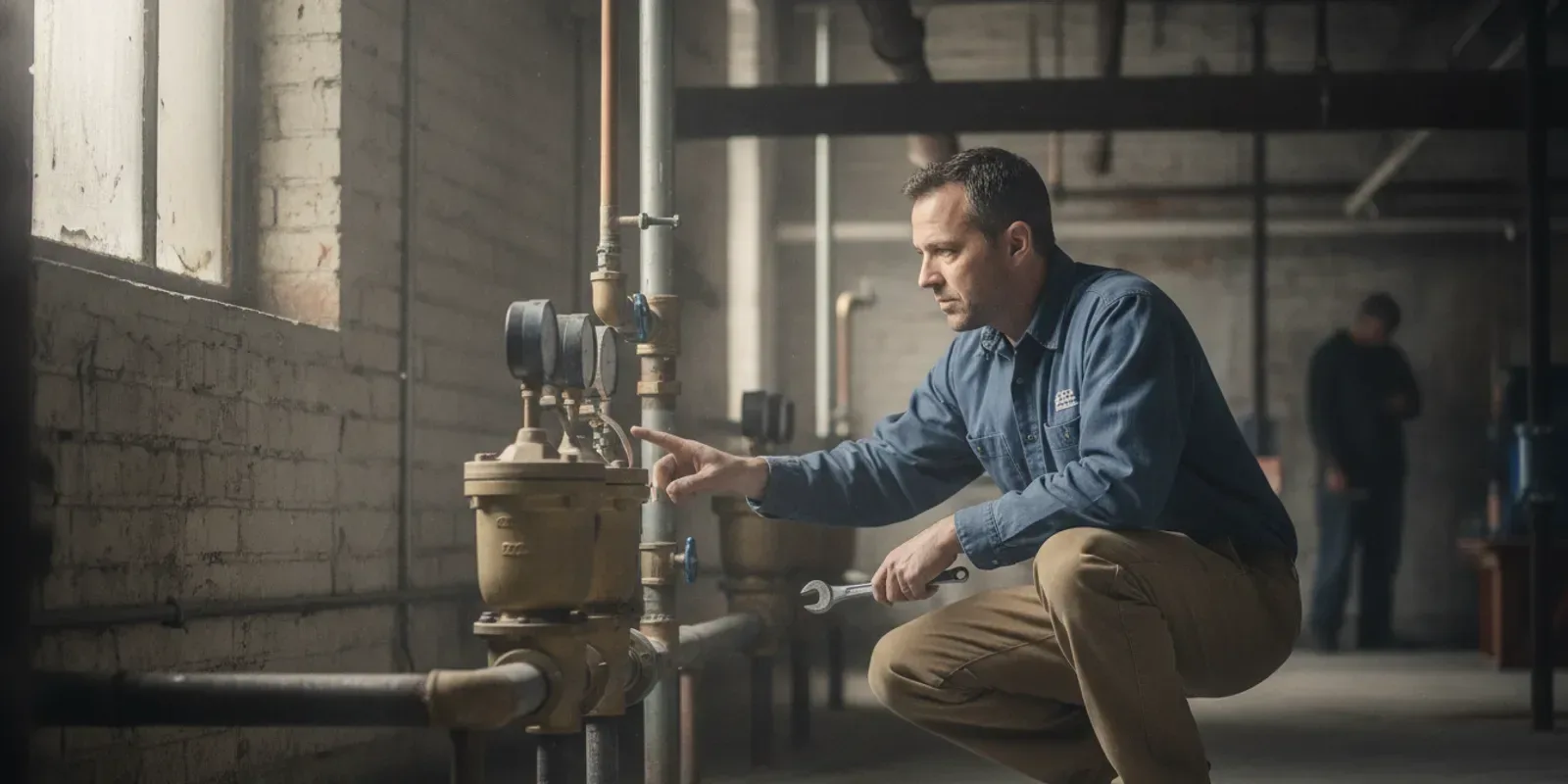
Backflow prevention basics for NYC property owners start with one principle: water should move in the intended direction. A change in pressure can reverse flow and potentially draw water from a connected pipe, tank, or process toward a potable supply. The right device and testing plan depend on the plumbing arrangement, the hazard, and applicable requirements.
Discuss a backflow question with a plumber
What is backflow, and why does it matter?
Backflow is water flowing opposite its normal direction. In a typical plumbing system, clean water travels from the supply toward fixtures and equipment. Two common mechanisms are backpressure and backsiphonage.
- Backpressure: Pressure in a connected system becomes greater than the supply pressure and pushes water backward.
- Backsiphonage: A drop in supply pressure can create suction that pulls water from a connected line toward the supply.
A cross-connection is a physical connection between a potable water line and a source that could introduce contaminants. It may involve equipment or piping connected to non-potable water, chemicals, or other substances. The specific concern depends on the use and configuration; a visible pipe alone does not establish the level of risk.
The U.S. Environmental Protection Agency explains that cross-connections can allow contaminants to enter drinking water when backflow occurs. Its overview of cross-connection control describes the basic risk and prevention approach: EPA Cross-Connection Control Manual. The information is a useful general reference, not a determination of the rules for a particular NYC property.
What does a backflow prevention device do?
A useful way to think about protection is as a managed connection rather than a standalone piece of hardware. The assembly must fit the piping and hazard, remain accessible for the required work, and be maintained according to the rules that apply to that system. A label or old report can help identify it, but neither alone proves that the current arrangement is appropriate.
For example, a building might have a device serving one piece of equipment while another water connection was added during a renovation. The new work can change what needs review. Compare the current layout with plans and records, and note additions, removed equipment, or changes in use. That history gives a professional a more useful starting point than the device name alone.
Different assemblies use different mechanisms to control reverse flow. Some use check valves; others use a relief mechanism or an air gap. Which arrangement is appropriate depends on the hazard, system design, and applicable requirements. A device selected for one situation should not be assumed suitable for another.
For an owner or manager, identifying a device is only the start. You also need to know what it protects, where it is installed, whether it is accessible, and what inspection or testing schedule applies. Do not assume that a device is working simply because it is present or because no water problem is visible.
Which properties or plumbing uses may need review?
Backflow protection questions can arise in homes, multifamily buildings, commercial spaces, and properties with specialized equipment. Potential cross-connections may be associated with irrigation, boilers, fire protection, commercial processes, or other systems. These are prompts for review, not a checklist that determines legal applicability.
In a NYC building, start by gathering information rather than guessing at a rule:
- What water-connected equipment or systems are present?
- Is there a dedicated backflow assembly, and can you identify its location?
- Do building plans, prior test reports, or maintenance records describe it?
- Has the system or its use changed since the last review?
- Is there a notice, filing request, or deadline that needs a response?
Requirements can depend on the building, water service, equipment, and current rules. A general article cannot determine whether a particular property must install or test a specific assembly. Confirm applicability with the relevant water authority or a qualified professional before making a compliance decision.
How should owners think about testing?
Preparation can make a test visit more straightforward. First, locate the device and make sure the route to it is clear; utility rooms may also contain equipment that should not be moved or operated by an unqualified person. Next, gather prior reports and notices. If the records list multiple devices, make a simple inventory with each device's location and identifying information so a report can be matched to the correct assembly.
Then coordinate access with the person who controls the room or system. Ask whether the work may require a temporary interruption and which occupants or staff need advance notice. The answer depends on the plumbing arrangement, so do not promise tenants a shutdown window until the scope is confirmed. After the work, compare the report's location and identification details with your inventory. If those details do not match, ask for clarification before filing or relying on the result.
Testing checks whether an assembly operates as intended under the procedure for that device. It is not the same as a visual glance, and a result should be tied to the correct assembly and date. The required interval, tester qualifications, reporting process, and follow-up depend on the applicable program and property circumstances. Avoid relying on a generic interval without verifying it.
Before arranging a test, collect what is available: device make and model, serial number, location, prior test reports, and any notices received. If details are missing, a plumber may need to identify the assembly first. Do not open, adjust, or bypass a device yourself; changing the assembly can affect system protection and may disrupt service.
What records should a property owner keep?
A practical record system should answer three questions quickly: which device is this, what happened at the last visit, and what action remains? For a small property, one labeled folder may be enough. A manager responsible for several buildings can keep a separate log for each address and link each entry to the report itself. Use consistent identifiers, such as room and equipment served, rather than relying on a vague note like "basement valve."
A clear file helps owners, supers, and managers track what was reviewed and what remains outstanding. Keep copies of:
- Device identification and location, including photos where useful.
- Test or inspection reports with date, result, and the professional or company that completed the work.
- Repair or replacement documentation and any follow-up test results.
- Notices, correspondence, submissions, and confirmation receipts related to the property.
- Relevant plans or notes describing connected equipment and plumbing changes.
Record the next action and its due date only after confirming the applicable schedule. If a report shows a failed test or recommends repair, ask what was tested, what corrective work is proposed, and whether a retest or filing is required. Keep the original report rather than relying only on a calendar reminder or verbal update.
How do identification, testing, repair, and reporting differ?
Consider two common situations. In the first, a new manager inherits a building with a device but no current paperwork. The immediate task is to identify what is installed and find out which records or requirements apply; scheduling replacement before that review may be premature. In the second, a test report names a specific assembly and documents a problem. The manager can then ask what repair is indicated, whether service interruption is expected, and what retest or submission closes the loop. These cases call for different scopes even though both begin with a backflow question.
These steps are related but not interchangeable. Knowing which one is needed helps you describe the request clearly and understand what a work visit will and will not cover.
- Identification: Locate the assembly and record its type and identifying details. This may be the first step when plans or prior records are incomplete.
- Testing: Use the applicable procedure to assess the assembly's operation and document the result. A visual check does not substitute where a formal test is required.
- Repair or replacement: Address a problem found during testing or review. The scope depends on the assembly and conditions; ask whether a follow-up test is needed.
- Reporting: Submit or retain documents as the applicable program requires. A report in your building file may not automatically satisfy an external filing requirement.
For example, if a manager finds an unlabeled assembly and a past-due notice, the first useful action may be to match the notice to the correct device, rather than immediately assume a replacement is needed. Once identified, the manager can confirm what test or submission is requested and plan access to the room. If the test identifies a fault, clarify the corrective work and the documentation needed afterward.
What questions should you ask before scheduling work?
Clear scope helps prevent confusion between identifying a device, testing it, repairing it, and submitting records. When contacting a plumbing professional, explain the property type, known equipment, device location if available, and reason for the inquiry. Ask:
- Can you identify the assembly and explain what it protects?
- What requirement or notice are you responding to, and how should it be verified?
- Does the requested work include inspection, a formal test, repairs, or record submission?
- What access or shutdown arrangements may be needed?
- What documentation will I receive, and who is responsible for follow-up?
Answers should be specific to the property. Review the company's plumbing and building service information and NYC service-area details for general context. For a property-specific scope, contact the team about your building.
When is professional confirmation especially important?
Professional confirmation is also useful when a property has more than one system or several devices in different rooms. A boiler connection, irrigation line, or specialized process may have distinct arrangements and records. Treat each one as a separate item to identify, rather than assuming a report for one assembly covers the whole building. If a renovation or equipment replacement is planned, raise the backflow question while the scope is being developed so required protection and access can be considered before the work is complete.
When you receive a notice, preserve the original and note its date, stated device or account reference, requested action, and any stated deadline. If the notice is unclear, contact the issuing authority through a verified channel and ask what record or assembly it concerns. Keep a note of the response and any confirmation number. A contractor's report and an agency's filing confirmation are different records; retain both when the process calls for them.
Seek a qualified review when a notice identifies a device or deadline, when plans or past records are unclear, after plumbing or equipment changes, or when a test indicates a problem. A professional can assess the arrangement and explain the work and records needed. If there is an active leak or immediate water concern, prioritize the urgent condition and explain it when calling; a compliance question alone does not establish an emergency.
Do not treat every building as having the same device, test interval, or filing obligation. Nor should a general service description be read as confirmation that a particular property meets a requirement. Keep the question, system details, and official correspondence together so the review addresses the actual circumstances.
Frequently asked questions
Does every NYC property need a backflow prevention device?
Not necessarily. Whether protection is required, and what type applies, depends on the property's water connections, equipment, and current requirements. Confirm applicability for the specific address and system.
Does having a device mean the system is compliant?
No. Presence alone does not confirm correct selection, installation, condition, testing, or required reporting. Check the device and records against applicable requirements.
Can I tell whether a device passed by looking at it?
A visual check cannot replace the test procedure where testing is required. Use dated documentation that identifies the assembly and records the result.
What if I cannot find prior test records?
Gather any notices, plans, equipment details, and photos of the assembly, then ask a qualified professional what identification and review are needed. Missing records do not establish that no device or obligation exists.
Call to discuss your building's backflow questions
Backflow protection is property-specific, so verify applicable requirements, identify the assembly, and keep test and follow-up records together.